Can professional sport venues be environmentally sustainable? As professional sports organizations continue to grow, their environmental and social responsibilities have become increasingly important. Especially, soccer stadiums can serve purposes beyond hosting games. They can become spaces where sport and local communities come together with the natural environment. FC Imabari, a professional soccer club in Japan, provides an interesting example of this approach through ASICS Satoyama Stadium.
The idea behind the stadium began with a desire to create an inclusive community hub where people could gather and where the communities and nature could coexist. The goal was also to create a place where the people of Imabari could rediscover the unique character and charm of their community. On January 29, 2023, Imabari Satoyama Stadium opened as the home stadium of FC Imabari (FC Imabari, 2026). The stadium was designed as an “open stadium,” providing a space where anyone can interact and enjoy the environment. On May 1, 2024, the stadium was renamed ASICS Satoyama Stadium as part of a naming rights agreement.
(1.1: Unique Home Stadium (ASICS Satoyama Stadium) surrounded by nature)
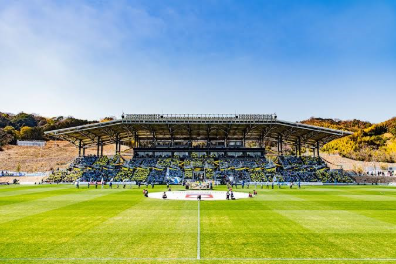
(FC Imabari, 2026)
The concept of Satoyama is central to understanding the stadium and FC Imabari’s approach to sustainability. Satoyama can be understood as a landscape in which nature and human communities coexist. FC Imabari uses this concept to connect soccer with environmental conservation and community development. Rather than treating the stadium simply as a place where matches are played, the club views it as a central hub for activities that enrich the local community and encourage people to connect with one another and with nature.The philosophy is also reflected in FC Imabari’s identity and story. The club uses the imagery of a pirate crew, with its members working in the community during the week and playing soccer on their “pirate ship” on weekends. The club plans to develop the Satoyama area into a place where people can get together and participate in community activities. Through these initiatives, Satoyama Stadium serves as a base for projects to revitalize Imabari City and the broader Toyo region. In this sense, the stadium is not simply the home of FC Imabari but is also intended to become a shared spiritual home for the club, its supporters, and the communities.
FC Imabari’s Philosophy of Environmental Sustainability
FC Imabari’s philosophy on environmental sustainability is rooted in the idea of “prioritizing spiritual wealth over material wealth for future generations.” Under the leadership of Chairman Takeshi Okada, the club has incorporated environmental responsibility into its broader mission. FC Imabari identifies several specific areas within its sustainability initiatives. These include energy efficiency and renewable energy, low-carbon transportation, and so on. These initiatives demonstrate that the club approaches sustainability as a broad organizational responsibility rather than focusing on only one environmental issue.
ASICS Satoyama Stadium represents this philosophy through its connection to the natural environment. The stadium is based on the Satoyama concept of harmonious coexistence between nature and human society. It incorporates environmentally friendly construction materials and activities that support nature conservation. In addition, FC Imabari operates educational initiatives such as Shimanami Earthland, which provide opportunities for residents and young people to learn about the importance of living in harmony with the environment.
(1.2: Shimanami Earthland is the place where you will be around Ehime’s nature)
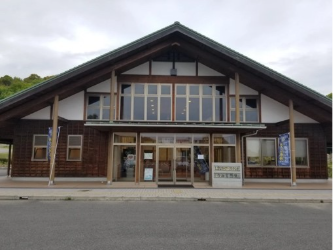
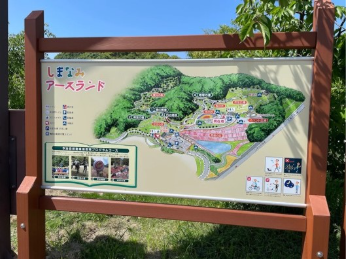
(inserted from Google Maps photos)
The club also emphasizes circular operations and sustainable community practices (FC Imabari, 2026). These efforts include sustainable agricultural activities and environmentally friendly merchandise. More broadly, FC Imabari’s corporate philosophy states that the club will conduct its business with consideration for the global environment, making environmental impact a key factor in its operations and long-term legacy.
Building Connections with the Local Community
Environmental sustainability is closely connected to FC Imabari’s efforts to build relationships with its local community. One example is the original cycle station installed at the stadium. The station uses materials from “Boshiro no Mori,” a forest managed by FC Imabari, and encourages supporters and visitors to travel to the stadium by bicycle. This reduces carbon emissions from transportation (FC Imabari, 2026). The cycle station was developed through a workshop
involving participants and was produced in collaboration with URBAN RESERCH Co., Ltd. The club also works with Imabari City to use electric vehicles to support visitor transportation.
(1.3: ASICS x FC Imabari running club)
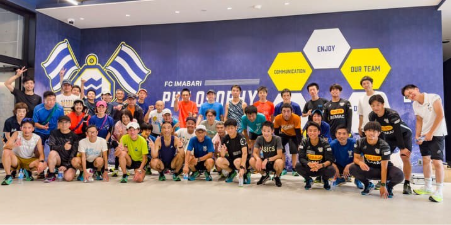
(FC Imabari, 2026)
Another important initiative is the FC Imabari Rice Field. Since 2023, the club has continued to cultivate rice on abandoned farmland near the stadium. People and students from FC Imabari High School Satoyama Campus participate in activities such as planting and harvesting rice (FC Imabari, 2026). This project not only gives community members an opportunity to participate directly in environmental and agricultural activities but also supports local production for local consumption.
The club also organizes beach-cleaning activities in collaboration with local community members. In addition to collecting marine litter, FC Imabari conducts upcycling workshops in which participants transform marine waste into items such as keychains. These activities contribute to resource recovery, reduce waste sent to incineration and landfills, and support the conservation of marine ecosystems. Importantly, these initiatives allow supporters to participate directly in sustainability rather than simply observing the club’s environmental efforts.
FC Imabari also creates opportunities for communication with its fans and supporters. At forums, participants can learn about their everyday environmental habits and estimate their personal greenhouse gas emissions. The club also promotes products related to match days that are produced within Ehime Prefecture. Through these activities, FC Imabari connects environmental sustainability with everyday behavior and fan engagement.
These initiatives demonstrate that FC Imabari sees its supporters as active participants in its sustainability efforts. The club is attempting to create a relationship in which environmental responsibility is shared among the people who are involved.
From an Inherited World to a Temporarily Entrusted Earth
FC Imabari’s sustainability philosophy extends beyond Imabari itself. The club promotes the creation of a society that prioritizes spiritual over material wealth for future generations. One of its central messages is that people should not think of the Earth as something inherited from previous generations, but rather as something temporary entrusted to the present generation for
the benefit of children who will live in the future. This perspective emphasizes long-term responsibility and encourages people to consider how their actions affect future generations.
(1.4: Building the bond with the local community by cleaning the nature they have grown up with)

(FC Imabari, 2026)
The club argues that people should avoid damaging or destroying the Earth and should consider social problems from the perspective of future generations. From this viewpoint, FC Imabari promotes a society that values intangible forms of capital, such as trust and empathy, rather than focusing exclusively on visible measures of economic success such as sales and GDP. In other words, the club values spiritual richness as an important component of a sustainable society.
This philosophy is reflected in FC Imabari’s mission statement. The club seeks to bring dreams and excitement to its employees and to society more broadly. It also aims to contribute to the creation of vibrant cities where diverse people can gather. In addition, FC Imabari seeks to contribute to world peace through grassroots exchanges with people involved in sports worldwide. Finally, the club commits to minimizing the environmental impact of its business activities.
Envisioning New Ways of Living Together through Soccer
FC Imabari demonstrates how a professional soccer club can use its stadium as more than a venue for sporting events. ASICS Satoyama Stadium represents an approach in which nature, people, community, and soccer are all connected. Through its Satoyama concept, the club attempts to create a space where people and nature can coexist while encouraging residents and supporters to participate in sustainability initiatives.
What makes FC Imabari particularly interesting is that its environmental philosophy is connected to a broader social philosophy. The club does not simply focus on reducing environmental impact. It also promotes a vision of society for future generations. Its initiatives demonstrate that even a professional sports organization can use its influence to address environmental and social challenges.
Therefore, FC Imabari’s message extends beyond Imabari or Japan. Its emphasis on environmental responsibility and community engagement provides an example for sports
organizations throughout East Asia and around the world. The club demonstrates that the size of a sports organization does not necessarily determine the significance of its impact. When an organization develops a clear, meaningful philosophy and consistently applies it to its operations and community activities, a local soccer club and its stadium can become a platform for broader social and environmental change.
(1.5: Evolution of FC Imabari: From regional league to J2)
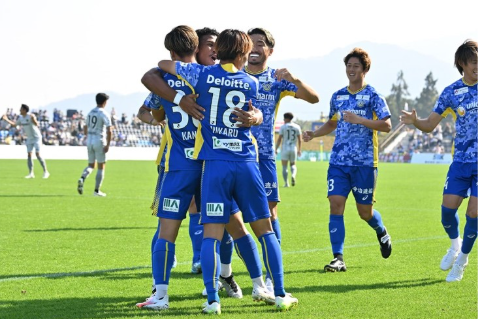
(FC Imabari, 2026)
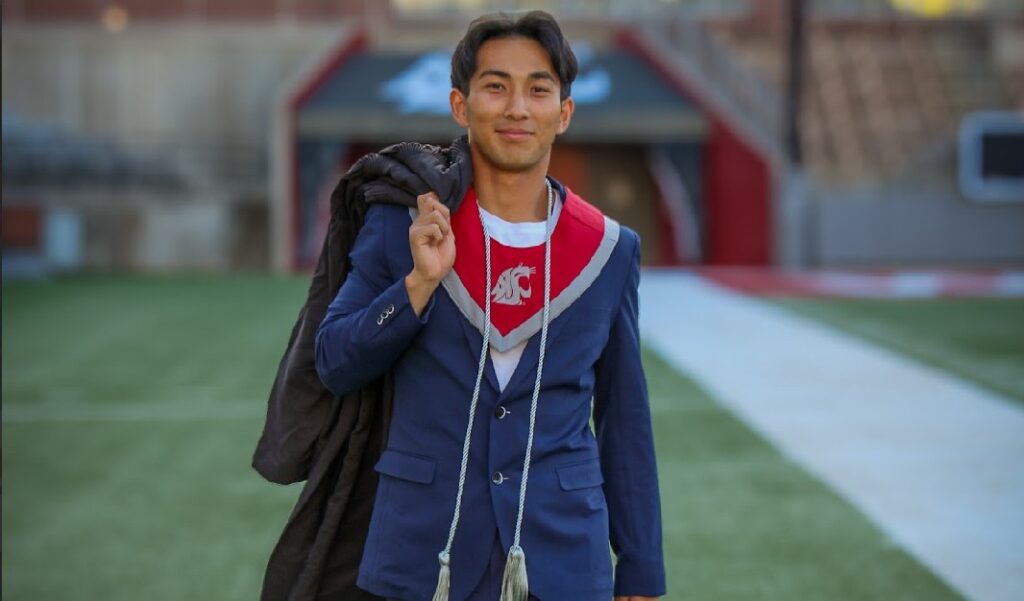
Kento is a second-year master’s student in the Sport Management program at Washington State University. During his first year, he has been actively engaged in faculty-guided research and in developing his own research project. His research examines how media framing of multiracialization shapes athletes on the Japan Football National Team with multiracial backgrounds and their Japaneseness and sense of belonging. Beginning in April 2027, Kento will work with the Japan Professional Football League (J.League), where he hopes to apply the knowledge and skills he has gained through the Sport Management program to contribute to the development of Japanese football.
Reference
IMABARI.YUME SPORTS INC. (2026). FC IMABARI.