
Photo: WSU Extension
Overview: Outdoor Education Initiative
It has been said that youth, and all adults, for that matter, spend more time looking at their screens rather than what’s on the other side of them. The Outdoor Education Initiative helps students cultivate a sense of place, a connection with the land, waterways, and non-human species/relatives that populate them. Developed in collaboration with area Tribes, the program familiarizes students with native flora and fauna of the region, and their traditional uses and cultural significance.

Given that some 50% of students on the Vancouver campus are low income, many students have had at best limited access to the region’s waterways.
The program got its launch in 2019, when Chinook Indian Nation Chairman Tony Johnson co-taught a course in Native American Literature alongside faculty
in the Department of English in a fifteen foot canoe on the Columbia River. The course generated considerable media attention, both locally and nationally.
Mni Wiconi: Water is Sacred
Water-based outdoor education classes have unique potential to instill in students a sense of responsibility to protect area waterways and ecosystems, in ways that will not only shape their future career paths, but also inspire greater levels of civic participation and support for policies that promote climate justice and keep fossil companies from broadening their foothold in the region.
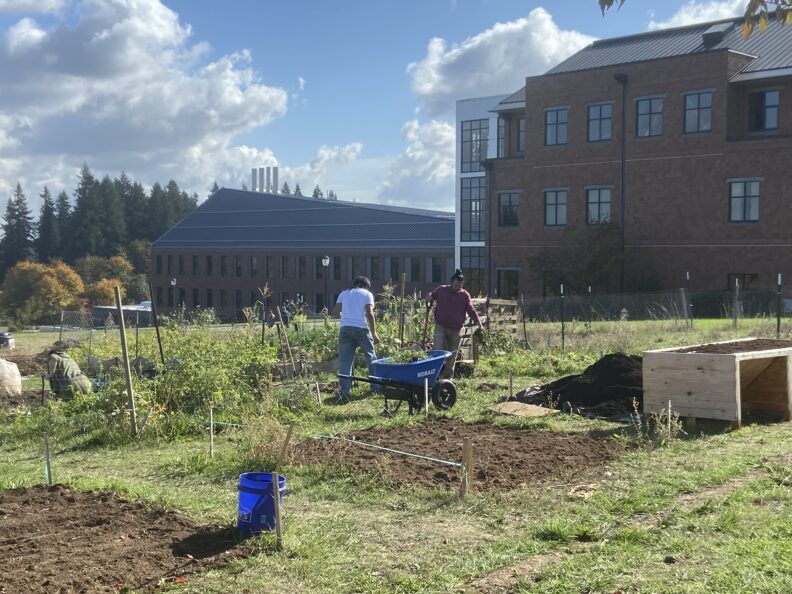
Alongside the obvious physical health benefits of outdoor education, the mental health benefits are also well-documented. In a time of increasing stress and unease, outdoor education helps foster a sense of mindfulness, of well-being, belonging and connection, fostering friendships and community, and building leadership skills. For students who came of age during the era of Covid isolation, outdoor education helps students reconnect with each other and with the broader community.
But outdoor education also provides broader benefits to the entire community. In traversing the region’s waterways, students also learn about the threats that climate change and fossil fuel infrastructure pose to the Columbia River, to delicate salmon spawning habitat, Indigenous “First Foods,” and ecosystems we all depend upon for survival.
For more information on WSU Vancouver’s Outdoor Initiative, email van.csej@wsu.edu