 What is Electrodermal Activity (EDA)?
Electrodermal Activity (EDA), also known as the Galvanic Skin Response (GSR), measures changes in the electrical properties of the skin due to sweat gland activity. The autonomic nervous system controls this physiological response and is often linked to emotional and cognitive states.
How it Works
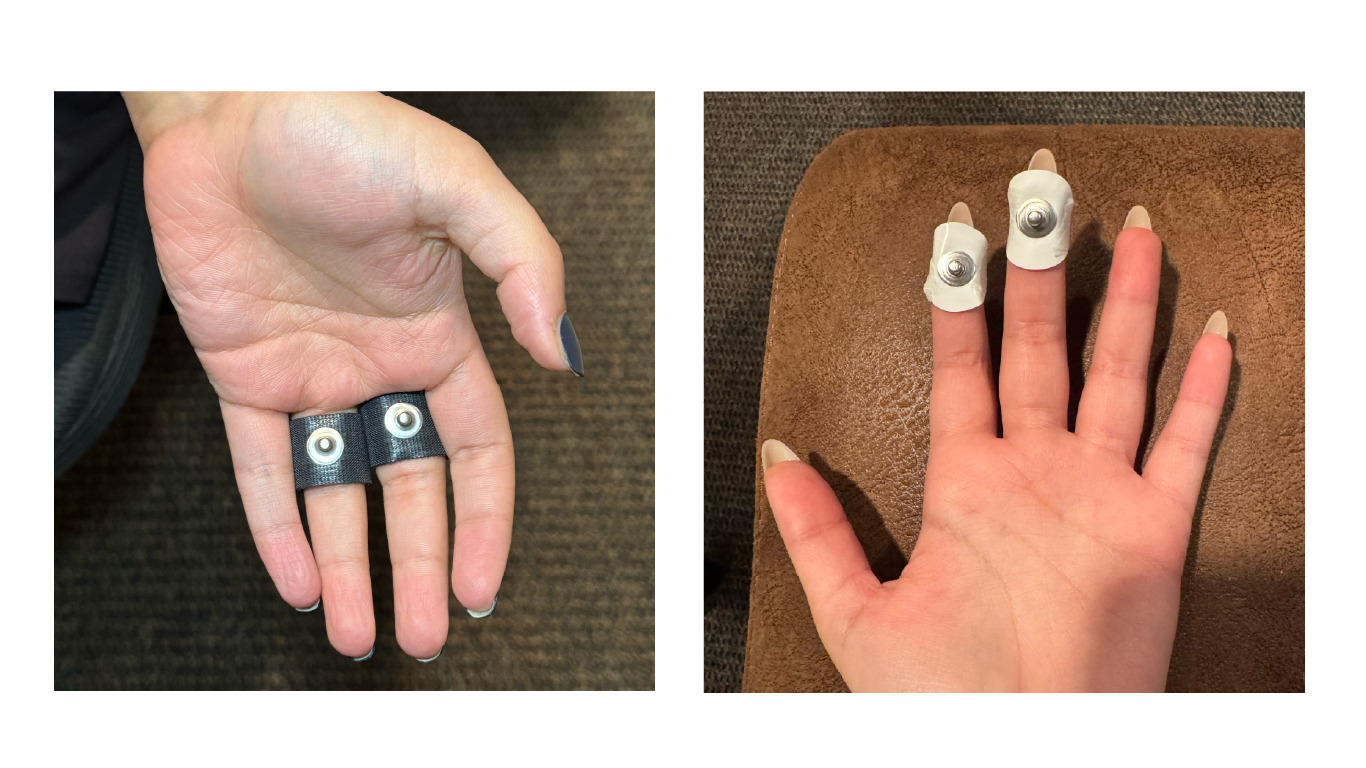
Your skin conducts electricity, but the level of conductivity changes based on how much moisture (sweat) is present. Sweat glands, especially those on your palms and fingertips, activate in response to psychological factors like stress, excitement, or concentration. EDA captures these changes by placing small sensors on the skin, measuring shifts in electrical conductance.
Why Do We Measure EDA in Our Studies?
At the Murrow Media Mind Lab, we use EDA to study how people emotionally and cognitively respond to media, advertisements, and other forms of communication. Since emotional arousal influences decision-making and attention, tracking EDA helps us understand how media impacts viewers on a deeper level. Here’s why EDA is important:
Measuring Emotional Response
- When people watch ads, movies, or digital content, their sweat gland activity changes based on how engaging or emotional the content is.
- A higher EDA response suggests the person is more emotionally involved.
Understanding Attention & Engagement
- If someone is highly focused on a piece of content, we often see an increase in EDA, indicating cognitive engagement.
- This helps advertisers and content creators design more effective, attention-grabbing materials.
Studying Stress and Decision-Making
- EDA is often used in psychological research to examine stress, anxiety, and decision-making.
- By analyzing EDA patterns, we can understand how stress influences choices, like purchasing decisions or political opinions.
How is EDA measured in our Lab?
We use iMotions and BIOPAC systems to accurately collect and analyze EDA data, providing real-time insights into emotional arousal and physiological engagement.
EDA Recording Process:
- iMotions Software – Synchronizes EDA with eye tracking, facial expression analysis, and ECG, creating a comprehensive view of physiological and emotional engagement.
- BIOPAC Systems – Enables short-term, long-term, and mobile EDA monitoring, ensuring accurate data collection across different research environments.
- Automated EDA Analysis – Detects skin conductance responses (SCRs), spontaneous fluctuations, and real-time changes in arousal, helping researchers understand how media stimuli affect the audience on a subconscious level.
EDA Sensors in Action
Why It Matters?
By studying EDA, we gain insights into how people react to media at a subconscious level. These findings help businesses, educators, and researchers improve communication strategies, advertising effectiveness, and media experiences. Understanding what captures attention and triggers emotions allows for smarter, more ethical content creation.