
Research in the MEZAP Lab integrates ecology, evolution, virology, and outbreak response to investigate the drivers of viral cross-species transmission. We combine field-based sampling, experimental virology, and computational modeling to understand host-virus compatibility and the ecological and genetic factors that shape viral spillover. Current projects focus on developing approaches to integrate genomic and transcriptomic data from wild hosts with in vitro studies to predict and test the potential for cross-species infection. By investigating the genomic basis of innate immune pathways and viral traits, we hope to uncover the molecular mechanisms underlying host-virus interactions. This approach allows us to investigate the molecular landscape involved in compatibility, providing valuable insights into the factors that determine the outcomes of host-virus encounters. Our current systems include coronaviruses, hantaviruses, orthopoxviruses, and filoviruses, especially those found at interfaces between humans, domestic animals, and wildlife.
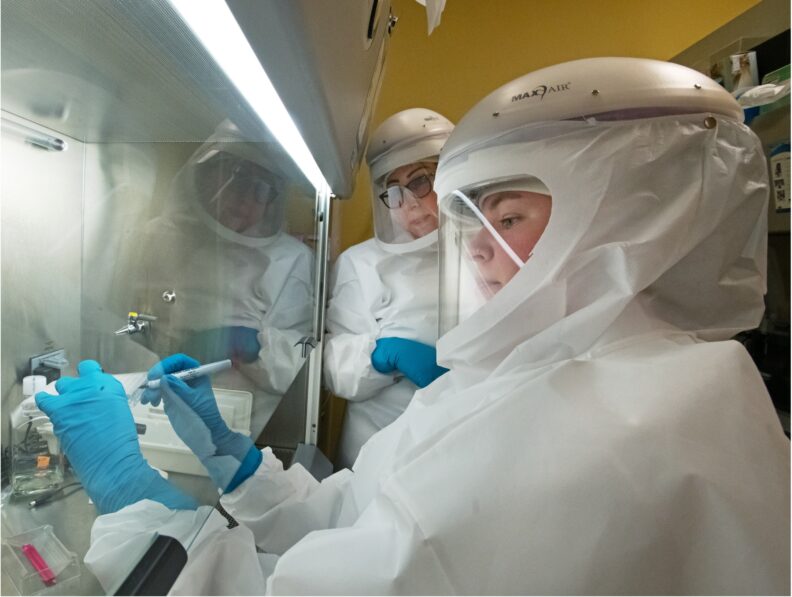
Cross-species transmission events require both exposure to a pathogen and molecular compatibility. To effectively study the phenomenon of cross-species transmission, we need to take an interdisciplinary approach. In the MEZAP lab, we use theory from ecology, evolution, and epidemiology to provide the framework through which we can understand the mechanisms that facilitate or limit cross-species transmission.

The study of nonmodel organisms and diverse pathogens poses a significant challenge due to the lack of molecular tools including assays for low-cost and high throughput pathogen surveillance. To study our complex systems, we develop novel methods for full viral genome recovery and broad virus surveillance from clinical and ecological samples. Our primary goal is to create assays that can be efficiently implemented in low-resource settings, thereby holding practical implications for rapid outbreak response. These advancements empower us to study the dynamics and prevalence of diverse pathogens in environments with limited resources.
Outreach
Diversity, Equity and Inclusion in the Sciences
Our goal is for the research environment in the MEZAP lab to be interdisciplinary and inclusive. We are dedicated to improving diversity and inclusion in the sciences and welcome lab members and collaborators with diverse backgrounds, training, and interests. We are committed to building a scientific community where creativity and the unique contributions of individuals are valued by promoting a culture of inclusion across gender, race, religion, age, nationality, or identity. As part of the School for Global Health, we endeavor to build meaningful collaborations and partnerships with our international colleagues.