Pablo Fugaro, a graduate of the School of Design and Construction and current Safety Engineer at Dawson Construction has successfully applied and implemented WSU Trimble Technology lab’s augmented reality equipment in his professional environment. Pablo has been using Trimble Connect in combination with the Trimble XR10 HoloLens hardhat and iPad-based scanning tools to improve field coordination and spatial accuracy on active construction sites.
Reflecting on his experience, Pablo explained that the primary benefit of this technology is its ability to bridge gaps in understanding across trades and disciplines:
The true benefit of having this technology is being able to walk in it with someone, like a subcontractor, and show them the details.
Using the HoloLens or its iPad-based counterpart, Pablo overlays digital models directly onto real-world environments, enabling field teams to visualize and verify locations of key components before installation. This is particularly valuable when resolving plan contradictions between systems like fire protection and electrical.
Sometimes the plans contradict each other: the fire sprinkler plan might not line up with the electrical plan and so then it’s been useful to actually take the model and scan it. . . I scan it on the iPad (it’s exactly the same as the hololens. . . just the mobile version of it). Then on the iPad, I can show people this is where things are. That’s kind of been the big thing and it’s been super useful.

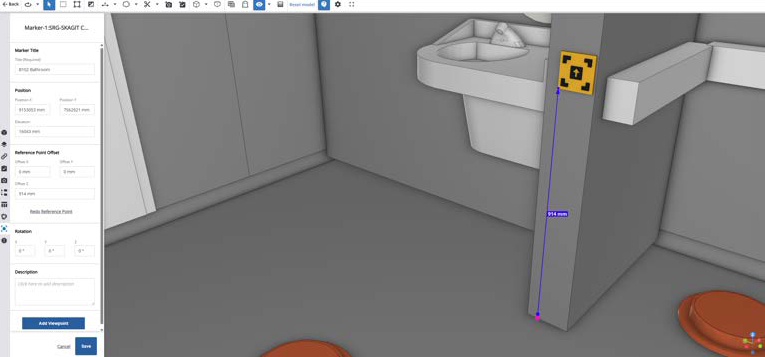
Pablo also leverages his background in architecture to adjust and update models directly.
With my architecture background, [I] go into the Sketchup model and modify some of the items, e.g., if the location of a paper towel dispenser changed, I can lay it all out in the model and then go out on the site and overlay it. . . right where it’s gonna be. Now we’ve got a perfect visualization of where everything needs to be.
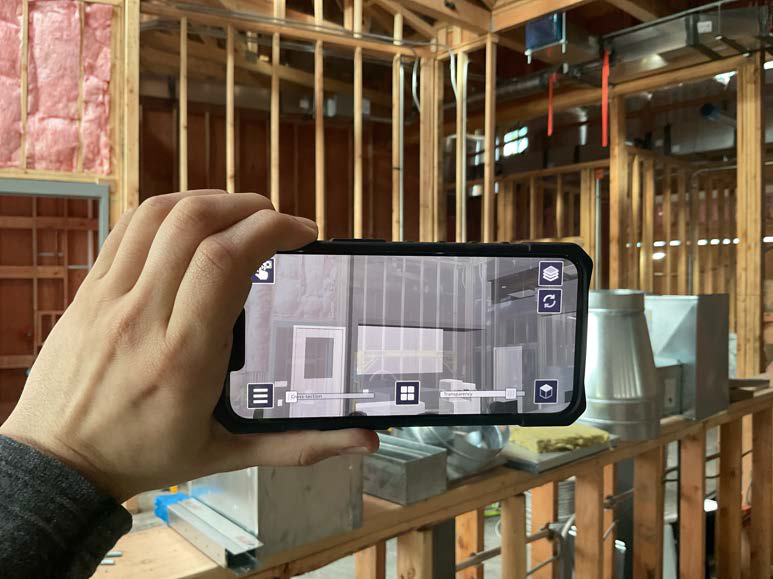
This AR workflow has proven especially useful when dealing with complex situations.
Before we put sheet rock on the walls, we just have our blocking. It gets pretty confusing to figure out what’s what and what’s going where. But as soon as you scan it all, [it] ends up working fantastically.
Pablo’s experience demonstrates the evolving role of SDC alumni in bringing digital tools from academic environments like the Trimble Technology Lab into practice. By integrating AR hardware and model-based workflows, he is contributing to greater clarity, accuracy, and efficiency in construction processes—bridging the gap between design intent and field execution.
Pablo has documented his experience by developing and sharing his workflow for future users. You can access the AR Connect Workflow here.