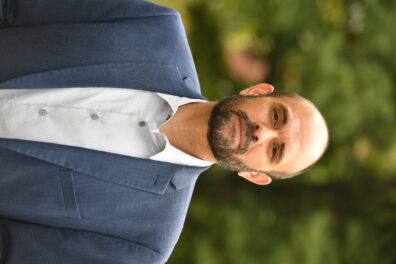
Dr. David A. Makin – Director, Co-Founder of the CSI Lab
Dr. David A. Makin, Ph.D., has over a decade of experience in translational research helping police departments, and other public safety agencies, in operationalizing existing data and implementing new data collection practices. As a mixed-methodologist, he has implemented research programs in a variety of police departments conducting quantitative and qualitative data collection and analysis to support evidence-based decision-making. He has experience coordinating and conducting research in a diverse range of environments including projects within the states of Pennsylvania, Kentucky, Indiana, Montana, California, Idaho, and Washington. Additionally, Dr. Makin through his comparative and international research has conducted research in China, Sierra Leone, Ghana, and Caribbean. As a researcher, he has nearly 50 peer-reviewed publications and has received over $3 million dollars in research funding, including research funded by the National Institute of Justice, National Science Foundation, and Office of Community Oriented Policing Services (COPS). He has demonstrated success in developing and implementing private-public partnerships to support technology development, implementation, and integration within police departments. He is as an expert in programmatic implementation and evaluation, technology assessments, and is among a select group of researchers actively working with police departments to integrate body-worn camera (BWC) footage into supervision, risk management, and training. In addition to his research, statistical, and disciplinary expertise, he has completed a 40-hour POST certified Crisis Intervention Team training, a 2-year Fellowship at the Southern Police Institute at the University of Louisville and holds several awards for research, teaching, and service across several institutions of higher education where he has worked.
Dr. Makin graduated from Pennsylvania State University in 2002 with a Bachelor of Science, received a Master of Science in Administration of Justice from the University of Louisville in 2004, and in 2012 received a PhD in Criminal Justice and Criminology from Washington State University.
Currently, Dr. Makin works with police departments to align body-worn camera technology, and other technologies, into existing practice, and revising policy to improve integration and operationalization. His work has been featured in a range of print and media outlets including national, state, and local news agencies and publications. Examples of this research include contextualizing use of force and procedural justice through body-worn camera footage, the Pullman police department smart policing initiative public safety camera project, national evaluation of genetic evidence within property crime scenes, the impact of recreational cannabis legalization on police practice, and research examining how public health interventions influence public safety.
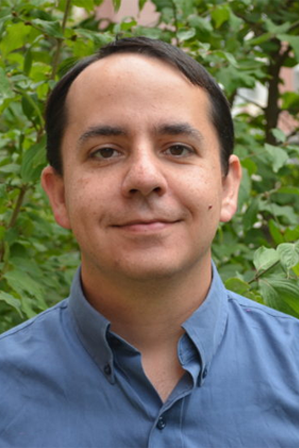
Dr. Dale Willits – Co-Founder of the CSI Lab
Dr. Dale Willits is one of the Co-Investigators for the Complex Social Interactions (CSI) Lab. Utilizing methods likes regression analysis, GIS and spatial analysis, social network analysis, text-mining, and qualitative comparative analysis Dr. Willits examines and researches subjects that include police organizational structure, policing outcomes, and policing data, and the relationship between place and crime. Before becoming a part of the CSI lab, his research has been funded by National Institute of Justice, the Washington State Traffic Safety Commission, and through internal grants at Washington State University. He has been published in Crime & Delinquency, Homicide Studies, Youth & Society, and Policing and Society. Dr. Willits’s work in the CSI Lab includes being actively engaged in developing the coding protocol and data management processes for the backend functions of the lab, composing several academic papers for publication, and securing future funding for the lab, as well as conducting data analysis. Dr. Willits received his PhD in Sociology from the University of New Mexico. His interest in research of this nature comes from pursuits in data quality to create policing, violence, and criminological theory.
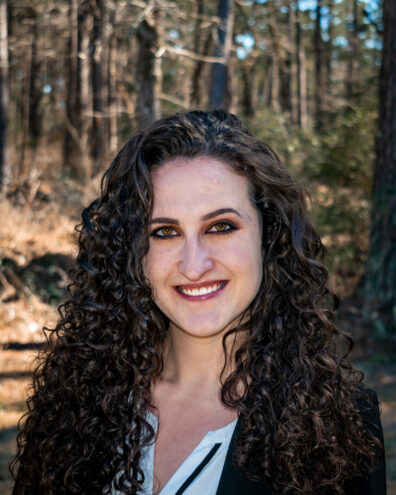
Dr. Christina Shellabarger – Lab Manager
Dr. Christina Shellabarger is an interdisciplinary scholar in the Department of Criminal Justice and Criminology at Washington State University. She is the Lab Manager at the Complex Social Interactions Lab, where she coordinates with justice system stakeholders, conducts training sessions, and develops codebooks, notably relating to interpersonal relations and crisis situations. Previously embedded within a police department as a 2022-2025 Public Safety Research Fellow, she engaged in policy formulation, community and departmental project initiation, research execution, and grant writing. Her scholarly expertise includes understanding the impact of legislation and policies on criminal justice organizations, decision-making processes involving impaired individuals, data management and translation, and implementing operational changes within organizations. Methodologically, she is proficient in primary data collection and management using secondary records in criminal justice systems, conducting legislative analyses, and survey design and deployment. Dr. Shellabarger also has expertise in program and institutional management, demonstrated through her facilitation of strategic planning committees, invited board membership at a university foundation, and the successful acquisition of over $14 million in grant and professional funding. In her prior role as a clinical field practitioner, Dr. Shellabarger managed specialized forensic mental health caseloads with the Oregon Psychiatric Security Review Board and the Arizona Department of Corrections. She holds certifications in non-violent crisis intervention, substance use disorder counseling, cognitive behavioral treatment group facilitation, co-triage, mental health first aid, and de-escalation techniques for mental health crises.
- Email: sayani.ghosh@wsu.edu
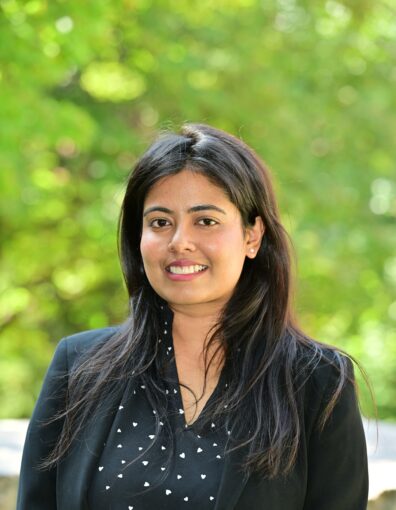
Dr. Sayani Ghosh – Staff Scientist
Dr. Sayani Ghosh is a Staff Scientist in the Complex Social Interaction Lab at the Department of Criminal Justice and Criminology at Washington State University. She earned her Ph.D. in Physics before making the leap into criminal justice, a transition that turned her world from particles to people. At the heart of her work is a love for machine learning and artificial intelligence, the connecting thread that links her background to her current research. She is passionate about applying ML and AI to better understand police–community interactions, uncover patterns in behavior, and inform evidence-based practices. A major focus of her work is harnessing these technologies to tackle real-world challenges in the public sector, bridging gaps between data, policy, and practice to make communities safer and interactions more just.
- Email: shlok.tomar@wsu.edu
- Website
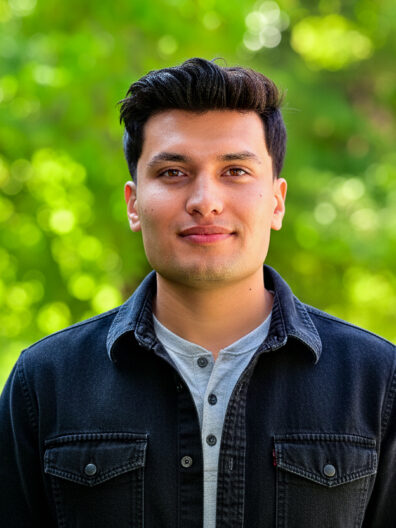
Shlok Tomar – Computer Scientist (AI/ML)
Shlok Tomar, M.S., is a Computer Scientist in the Complex Social Interaction Lab at the Department of Criminal Justice and Criminology at Washington State University. He earned his Master of Science in Computer Science from Washington State University, where his research focused on Applied AI, Bayesian Optimization and Large Language Models (LLMs). Shlok’s professional journey spans from optimizing DevOps workflows at Meta to deploying predictive modeling for federal agencies.
Now focused on the intersection of technology and criminology, he is passionate about applying his deep technical skills in machine learning, computer vision, and natural language processing to better understand police–community interactions, uncover patterns in behavior, and inform evidence-based practices. Passionate about deploying “AI for Social Good,” Shlok develops novel AI frameworks to bridge gaps between complex data, policy, and practice, providing the CSI Lab with the analytical power needed to inform modern criminal justice reform.
Affiliated Researchers
- Email: kbala@wsu.edu
- Google Scholar
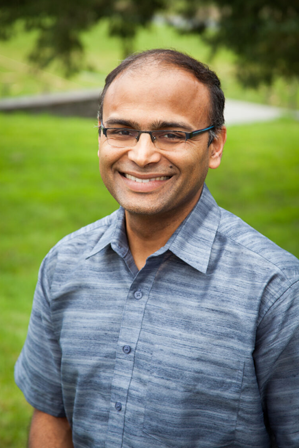
Dr. Bala Krishnamoorthy – Co-Investigator
Dr. Bala Krishnamoorthy and his Mathematics graduate students bring in expertise in machine learning and data analytics to the CSI Lab. Bala is an expert in topological data analysis (TDA), a suite of unsupervised learning and data analysis tools based on the mathematical field of algebraic topology. Using TDA, Bala and other CSI Lab members have been extracting insights from body-worn camera video data sets and police survey data sets that could not be discovered by traditional techniques.
- Email: hillary.mellinger@wsu.edu
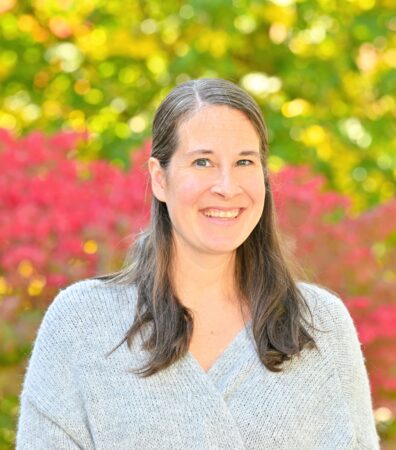
Dr. Hillary Mellinger- Co-Investigator
Hillary Mellinger, Ph.D., is an Assistant Professor within the Department of Criminal Justice and Criminology at Washington State University (Pullman campus). Prior to joining the department in Fall 2021, Dr. Mellinger taught at George Washington University, George Mason University, and American University.
Before pursuing her Ph.D., Dr. Mellinger worked as a Board of Immigration Appeals Accredited Representative at the Tahirih Justice Center, a national nonprofit organization that supports immigrant women and girls fleeing gender-based violence through a combination of legal representation, social services and public policy.
Dr. Mellinger’s research focuses upon asylum policy, the criminalization of migration, the immigration legal profession, and interpretation challenges within the criminal justice system and immigration system. In particular, Dr. Mellinger focuses on the intersections of the criminal justice system and immigration system. She applies a mixed-methods approach to her research and uses qualitative methods (such as interviews and focus groups) as well as quantitative methods (such as regressions, survey analysis, and matching techniques).

- Email: rachel.bailey@wsu.edu
- Research Gate
- Google Scholar
Dr. Rachel Bailey – Co-Investigator
Dr. Rachel Bailey’s research program examines how biological imperatives interact with environmental circumstances to influence human behavior, information processing, and decision-making. Before joining the CSI Lab, Dr. Bailey developed a theoretical model of environmental circumstances that lead to automaticity in information encoding. Dr. Bailey has also built a strong record of research examining processing of motivationally relevant information, especially food stimuli, and food decision-making behaviors under various environmental constraints. Dr. Bailey is an expert in the use of peripheral psychophysiological methods and directs the Communication Emotion and Cognition Lab at Washington State University. As a CSI Lab Co-Investigator, she will be heading up the application of autonomic psychophysiological metrics in the lab’s multiple metric approach. This approach will allow the investigators to understand more accurately what is going on for officers in high stress circumstances rather than simply relying on self-reported perceptions and memories alone. Dr. Bailey received her PhD in Mass Communication from Indiana University in 2014. Her work is published in high-ranking communication and psychology journals.

Dr. Indigo Koslicki – Collaborator
Dr. Indigo Koslicki is an assistant professor of Criminal Justice and Criminology at Ball State University. She received her doctorate from Washington State University, and is continuing her role as a collaborator at the Complex Social Interactions Lab at Washington State University. She has previously published on police militarization and her research interests include police culture, police equipment and technology, and quantitative content analysis. She continues to assist the lab in the preparation of manuscripts for publication.
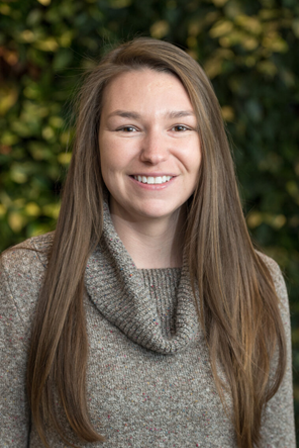
Dr. Megan Parks – Collaborator
Megan Parks earned her doctorate in the Criminal Justice & Criminology Department and was the lab manager of the Complex Social Interaction Lab (CSI Lab) at Washington State University between 2019-2022. She is proficient in data management and annotation software development. Her research primarily focuses on police-community interactions, rural policing, and the influence of policy changes on police agencies’ resources and practices.

Brittany Solensten – Collaborator
Brittany Solensten is a doctoral candidate in the Criminal Justice and Criminology Department. She was a lab manager of the Complex Social Interaction (CSI Lab) at Washington State University between 2022-2025. Within this role, she created a codebook and data-entry form to analyze the procedural justice of traffic stops using body-worn camera footage. Her main research focuses are policing, specifically in discretion and decision-making, stress and well-being, and how police adapt to new policies. She has skills in data cleaning, management, and analysis, along with proficiency in Microsoft Excel, Microsoft Access, and R/RStudio.