Experimental Archaeology: Taking a break from lab work
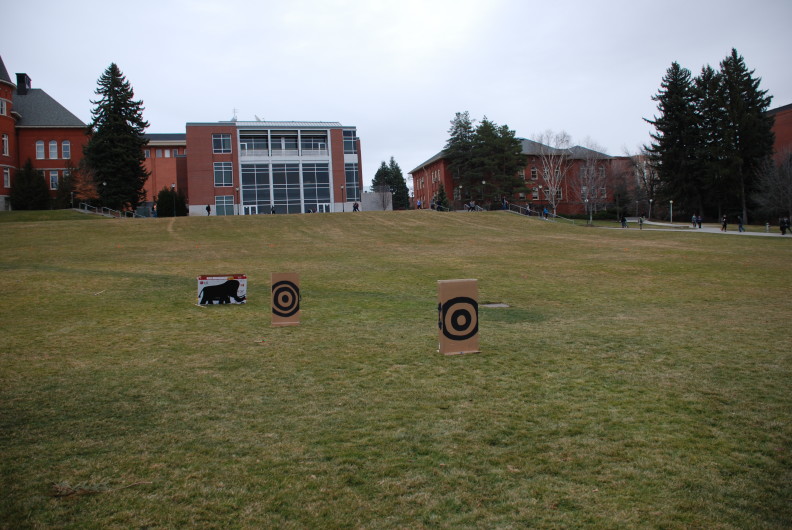
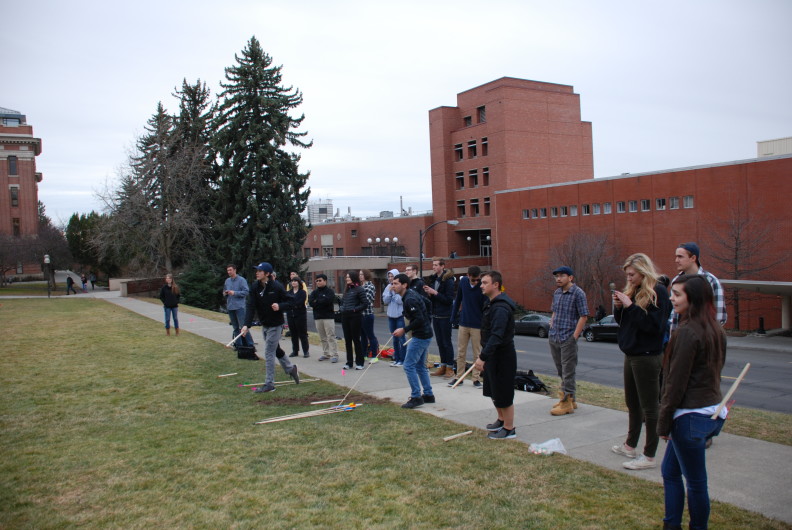
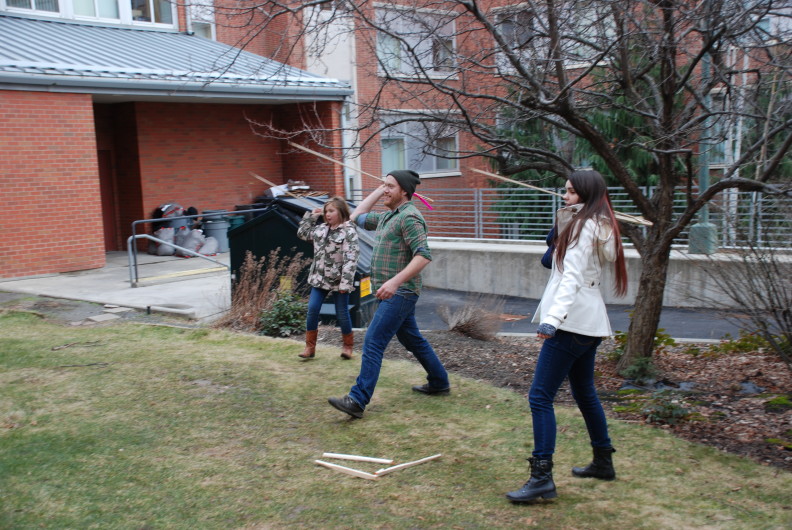
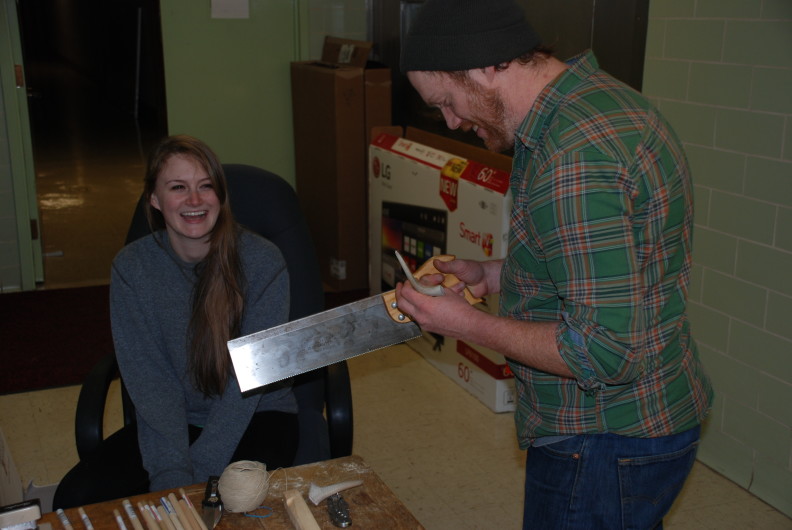
colin.christiansenTushingham Lab personnel joined Anthropology Collections Lab personnel and graduate students in some experimental archaeology this month. Participants created atlatl throwing sticks and darts from simple materials to serve as educational tools for the Anthropology Museum. Over the span of a few days, the group whittled, cut, sanded, taped and glued until they had amassed 12 atlatl throwing sticks and 20 darts. Rigorous field tests were conducted and flight data was analyzed until the perfect dart design was achieved. That is, the perfect design for a large class of inexperienced students. (Read: non-lethal). On February 11, 2016 the inaugural atlatl throwing session took place at Thompson Flats on the WSU campus, performed by the Spring 2016 Anthropology 334 class.
THE PARTS
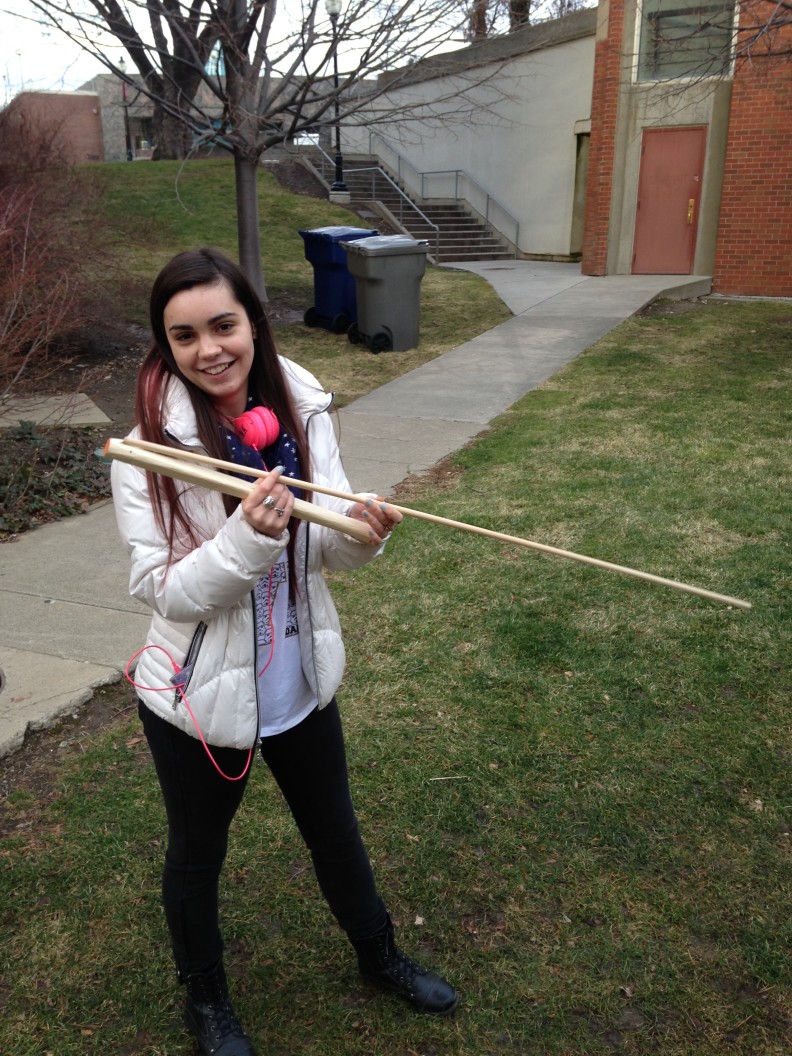
In order to expedite the process and ensure a cap on performance, wooden dowel rods were used as dart shafts. A variety of diameters were used to demonstrate a range of flexibility and performance. To provide weight while reducing the potential for carnage, blunt fishing weights were used in lieu of projectile points. A colorful array of feathers from a local craft store provided stability and control. Atlatl throwing sticks were rudiment-ally carved out of pine wood scraps. Spurs were simply whittled into the wood.


THE PROCESS
The group of volunteers built and tested all the sticks and darts. These daring engineers were: Greer Tushingham, Dr. Shannon Tushingham, Cassady Williams, Andrew Frierson, Shakira Cosme, and Colin Christiansen.


Time for Practice