__________________________________________________________________________
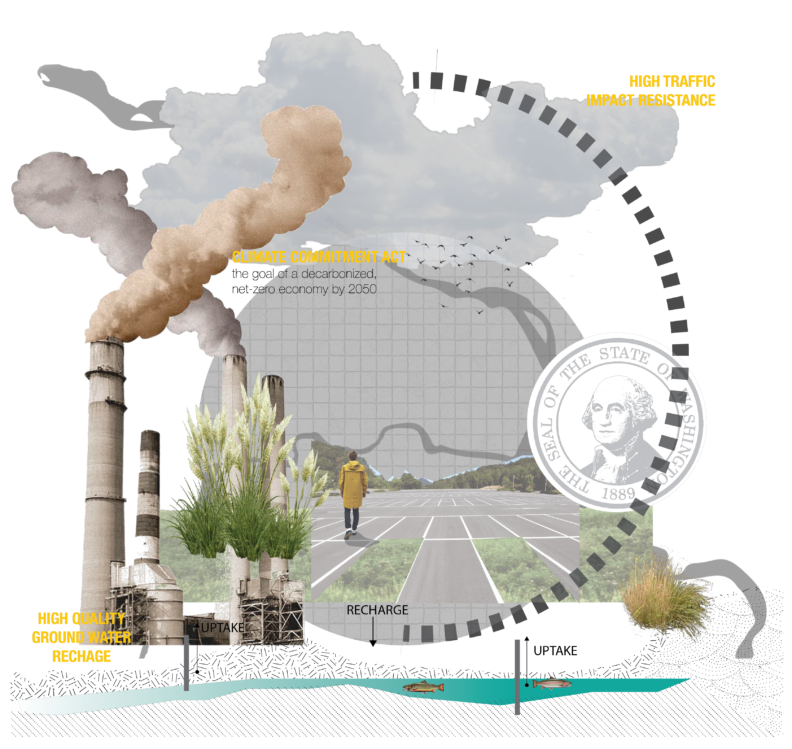
Turfgrass Pavers can offer potential improvements in water management, heat island effect, and sustainable practices in the built environment. This study seeks to define the ability of different types of turf to perform and resist in high traffic and stormwater management conditions for designers, developers, and homeowners.
__________________________________________________________________________
THE ISSUE
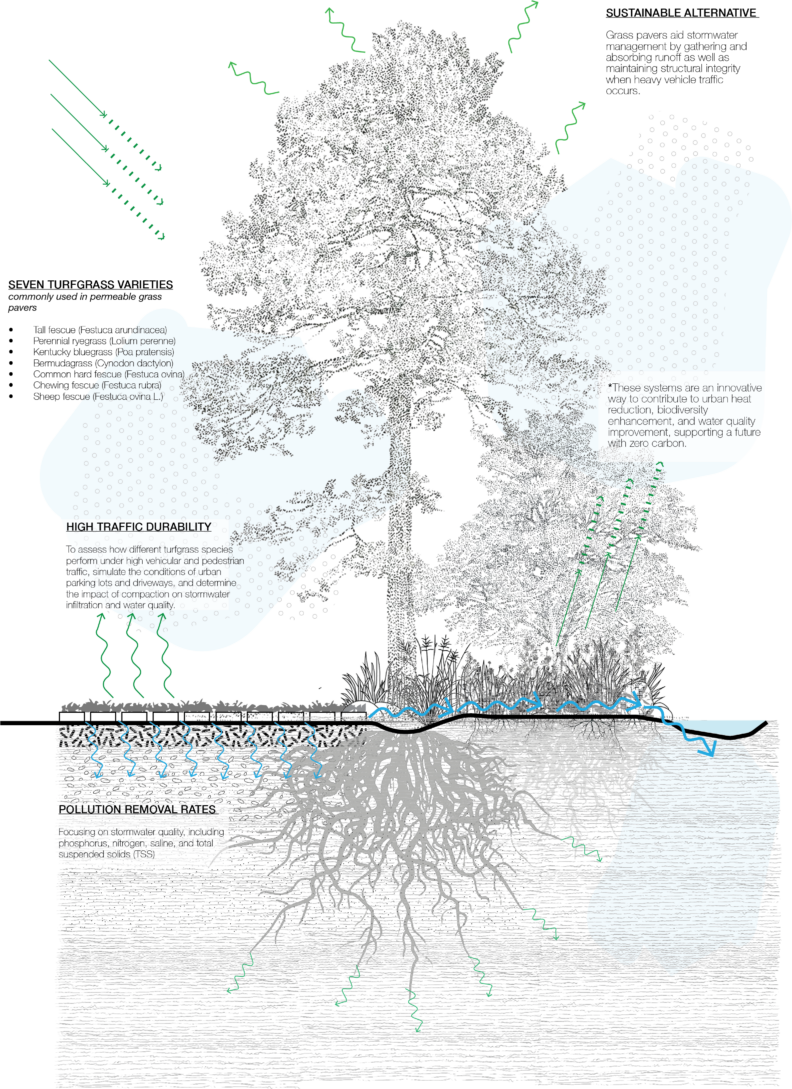
As we actively seek methods to achieve sustainability in the face of climate change, turfgrass plays a key role in urban design. Numerous green infrastructure solutions may be applied to achieve the sustainable goal. However, permeable grass pavers stand above others due to their multiple functions. Grass pavers aid stormwater management by gathering and absorbing runoff as well as maintaining structural integrity when heavy vehicle traffic occurs. These systems are an innovative way to contribute to urban heat reduction, biodiversity enhancement, and water quality improvement, supporting a future with zero carbon. Although permeable grass pavers hold high potential, there is a literature gap regarding what grass species is the best to use in these systems. Particularly when it comes to the plant’s resilience to high traffic and the ability to reduce contaminants in stormwater runoff. It is important to know which turfgrass species performs the best in permeable paving applications; this way, we can maximize the ecological benefits and ensure their longevity. This study addresses this gap by evaluating the stormwater quality and traffic stress surability of five commonly used turfgrass species in permeable grass pavers. The findings will provide valuable insights for urban planners and landscape architects who are seeking to implement sustainable practices in the urban environment.
WHAT WE DID
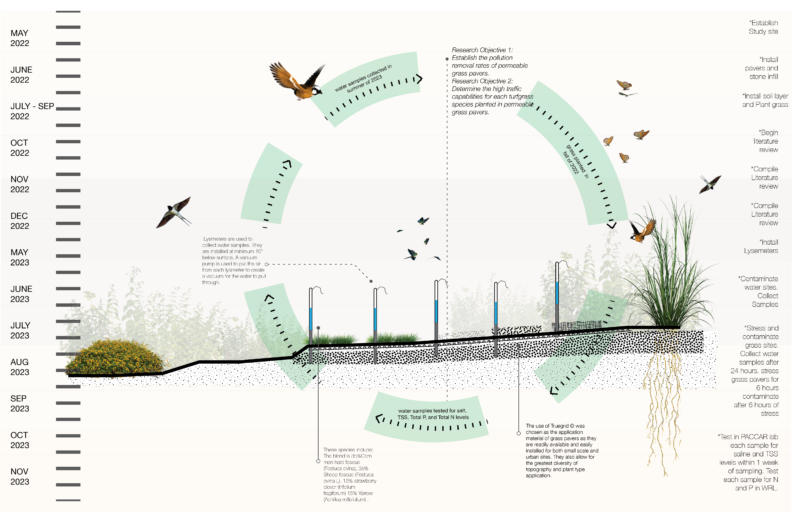
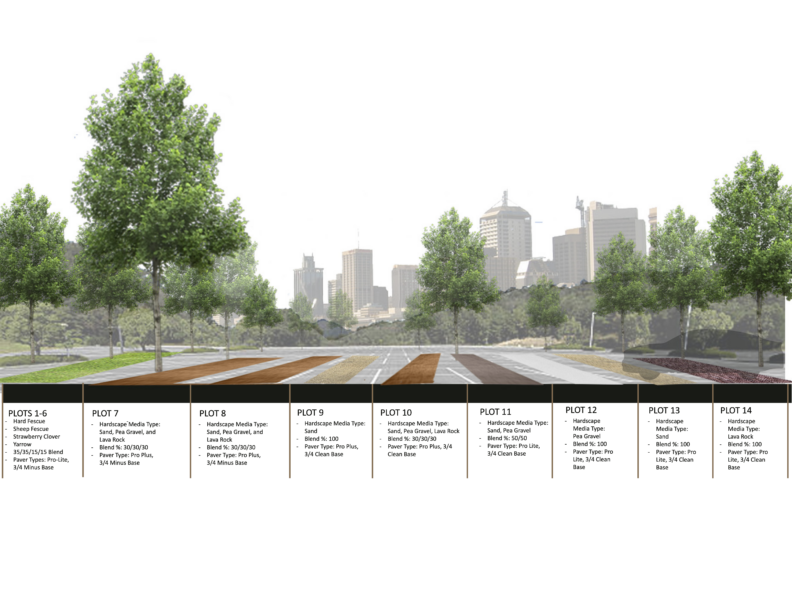
This 24-month study was conducted using a series of 2’x4’ permeable paver plots designed to evaluate stormwater remediation performance and turfgrass tolerance under variable conditions. Each plot was constructed with a dual-layer base consisting of 5/8” angular stone for structural stability and 1.5” clean angular stone for drainage. Turfgrass plots (1–6) were filled with topsoil to support plant growth, while plots 7–14 used alternative hardscape infill materials such as sand, pea gravel, and lava rock to compare their effects on water infiltration and pollutant removal. Two types of pavers were tested: Pro-Lite pavers (used in plots 1–3, 8–9, and 11–14) and Pro-Plus pavers (used in plots 4–7 and 10), both offering permeable surfaces with different structural characteristics.
To simulate stormwater pollution events, contaminated water with known concentrations of pollutants—including nitrogen, phosphorus, saline, oil and grease, BOD, and altered pH levels—was applied to the plots. Water samples were collected 24 hours later using lysimeters to analyze each treatment’s capacity to filter and remove contaminants. Additionally, traffic stress was simulated using weighted turf rollers to replicate conditions similar to parking lots or driveways. The effects of this stress were evaluated by monitoring turfgrass health (e.g., wear, thinning, and coverage loss) and measuring how compaction influenced runoff quality and infiltration rates. This dual-objective approach allowed for comparison of both pollutant removal efficiency and turf resilience across different paver systems and infill media.
WHAT WE DISCOVERED
This research demonstrated that permeable grass pavers using turfgrass blends were highly effective at removing pollutants from stormwater runoff, particularly phosphorus, nitrogen, saline, and total suspended solids (TSS). Across the turfgrass plots, phosphorus reductions averaged nearly 88%, with the most successful plot achieving a 98% reduction. Nitrogen and saline reductions also showed strong performance, averaging over 75%, while TSS reductions were similarly consistent at 73%. Notably, plots using Pro Plus pavers outperformed Pro Lite pavers in most categories, suggesting the structure and compaction tolerance of the paver type can influence water treatment outcomes. Turfgrass species such as Hard Fescue and Sheep Fescue maintained good coverage under traffic stress, indicating their potential use in urban settings like driveways and parking lots where both durability and stormwater management are critical.
In comparison, hardscape media plots—utilizing materials such as sand, pea gravel, and lava rock—also showed strong performance in phosphorus removal, with several plots achieving reductions above 90%. However, nitrogen reduction was minimal or nonexistent in most hardscape plots, with only one plot showing measurable improvement. Saline and TSS removal remained high across most media types, particularly in plots using 100% lava rock or blended media, suggesting these materials can still play a role in water quality management where vegetation isn’t viable. Overall, while both systems showed value, turfgrass-integrated pavers demonstrated broader pollutant removal capabilities and added green infrastructure benefits, especially when paired with higher-performing paver designs like the Pro Plus system.
WHAT IT MEANS
The results of this study provide clear guidance for integrating stormwater management into the design of high-traffic urban spaces. Turfgrass-based permeable pavers, particularly those using Pro Plus systems, offer a dual benefit: they significantly improve stormwater quality—especially by reducing phosphorus, nitrogen, saline, and TSS—and they provide durable, green surface alternatives for areas like parking lots, driveways, and pedestrian corridors. Landscape architects can confidently incorporate specific turfgrass blends (e.g., Hard Fescue, Sheep Fescue, Strawberry Clover, and Yarrow) into their designs, knowing they maintain performance under compaction and traffic stress while contributing to environmental goals.
For sites where vegetation is less viable, hardscape media such as lava rock or blended aggregates can still offer strong reductions in stormwater pollutants—particularly phosphorus, saline, and suspended solids—though they may be less effective for nitrogen. Designers should consider media blends and paver types as active components of water treatment strategies, not just structural solutions. These findings support a more integrated, site-specific approach to sustainable urban design, where surface materials are selected not only for aesthetics and load-bearing capacity, but also for their contributions to ecological health and compliance with stormwater regulations.

GREENING URBAN AND RESIDENTIAL SPACES| Turfgrass Design Typologies in Residential and Urban Landscapes
PREFERENCES AND PERCEPTIONS STUDY | | Survey and Analysis of Homeowners’ Preferences and Perceptions of Turfgrass Design and Water Maintenance
PERFORMANCE AND RECOVERY OF TURFGRASS | Survey of the Performance and Recovery of Turfgrass in Grass Pavers
RESILIENT TURFGRASS MANAGEMENT | Insights from High-Use Landscapes in Washington State
STORMWATER REMEDIATION & TOLERANCE | Understanding Salt and Nutrient Removal from Stormwater by Turf and Native Grasses