Principal Investigator


Lisa A. Shipley
Professor, School of the Environment
425 Heald Hall, Washington State University, Pullman, WA 99164-2812
509-335-9182; Shipley@wsu.edu
Education:
Ph.D. Texas A&M University, Wildlife and Fisheries Sciences
M.S. University of Maine, Wildlife Management
B.S. Colorado State University, Wildlife Biology
Research interests:
- Foraging ecology, nutrition and diet selection of vertebrates
- Morphological and physiological adaptations of plants and animals for herbivory
- Behavior and habitat requirements of free-ranging mammals
Teaching:
SoE 310 – Methods in Wildlife Ecology
SoE 435 – Wildlife Ecology
SoE 556 – Foraging Ecology of Herbivores
Postdoctoral Researchers

Meghan Camp
Measuring ungulate densities in northeastern Washington using camera traps and distance sampling
Ph.D. 2017 –The balancing act of foraging: mammalian herbivores trade off multiple risks when selecting food patches

Steven Woodley
Assessing wildlife communities in relation to land use in east-central Washington
Current and recent graduate students
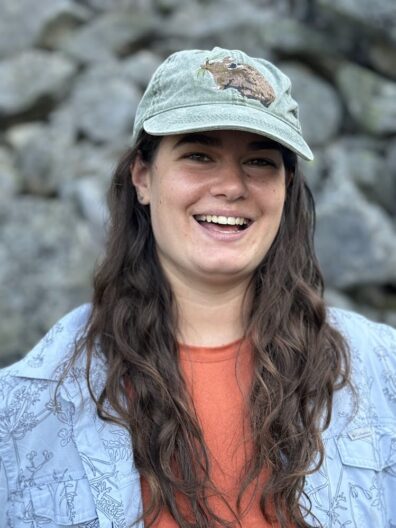
Allison Stift Ph.D. (in progress)
Modeling characteristics of rocky habitat and habitat suitability for rock-dwelling wildlife in the Cascade Mountains
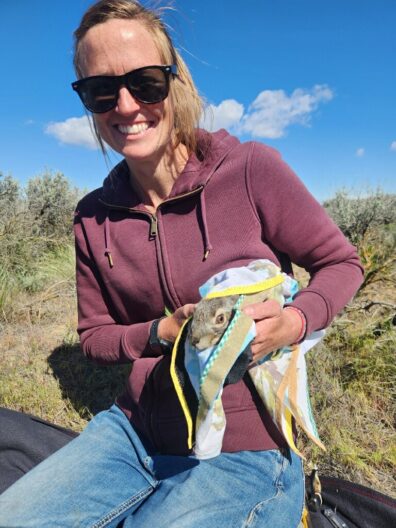
Claire Kurlychek M.S. (in progress)
Jackrabbit movement and habitat selection in central Washington
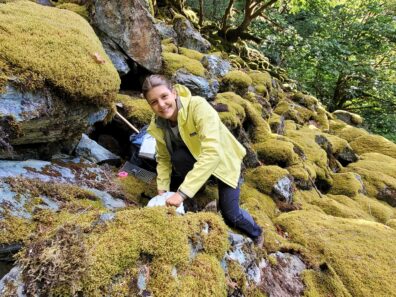
Ana Torres Ferreira M.S. 2025
Relating talus characteristics to habitat use by vulnerable alpine mammals in a changing climate

Katie Anderson, Ph.D. 2025
The microbial link between a ruminant and its habitat
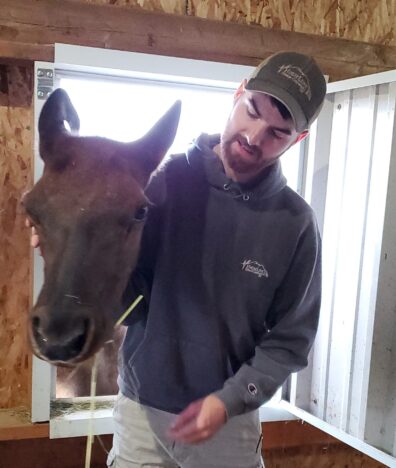
Trent Hill M.S. (in progress, Co-advisor)
Use of leg mounted monitors to assess the effects of treponeme-associated hoof disease on elk (Cervus canadensis) activity

Allison Stift M.S. (co-advisor, 2024)
Sagebrush steppe wildlife in a working landscape: habitat use, abundance, and detection
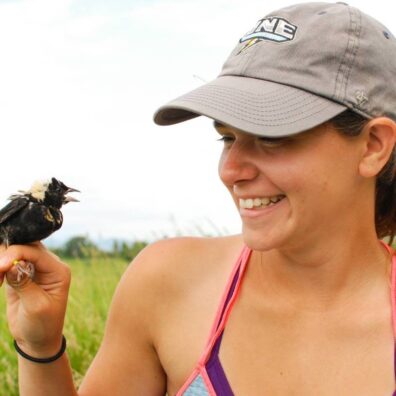
Kylie Denny M.S. (2024, co-advisor)
Where there’s smoke there’s fire: Howe mixed severity wildfire affects a community of wildlife species

Rebekah Lumkes, M.S. student, 2023
Effects of Conservation Reserve Program on Mule Deer Habitat Selection, Movement, and Vital Rates in Southeastern Washington

Cullen Anderson, M.S. (co-advisor, 2022)
Assessing density of unmarked mule deer and coyotes using Random Encounter Models

Logan Whiles, M.S. 2021 (co-advisor)
Predation risk for hoary marmots in the changing climate of Washington’s North Cascades.

Anna Staudenmaier, M.S. 2020
A comparison of the fundamental nutritional niche and realized habitat niche of sympatric mule and white-tailed deer in eastern Washington

Deborah Monzingo, M.S. 2020
Influences of habitat characteristics on forage resources of Rocky Mountain elk (Cervus canadensis) in North-Central Idaho

Peter Olsoy, Ph.D. 2019 (co-advisor)
Habitat mapping and multi-scale resource selection of pygmy rabbits with unmanned aerial systems

Iver Hull, M.S. 2018
Influences of fuel reduction treatments on nutritional ecology of deer in northeastern Washington

Jonathon Heale, M.S. 2018
Habitat selection by Columbian white-tailed deer along the Lower Columbia River

Stephanie Berry, M.S. 2017
A comparison of nutritional and foraging ecology of sympatric mule and white-tailed deer in northeastern Washington

Kyle Ebenoch, M.S. 2017 (co-advisor)
Comparing population vital rates of resident and translocated greater sage-grouse on the Yakima Training Center, Yakima, WA

Amy Ulappa, Ph.D. 2015
Using foraging dynamics to answer landscape management questions: The nutritional ecology of black-tailed deer

Miranda Crowell, M.S. 2015
Food and fearscape: Responses of generalist and specialist rabbits to food and predation risks

Kourtney Stonehouse, M.S. 2013
Habitat selection by sympatric, translocated greater sage-grouse and Columbia sharp-tailed grouse in eastern Washington

Tiffany Baker, M.S. 2015
Habitat Selection and spatial responses of bighorn sheep to forest canopy in north-central Washington
Current and Recent Undergraduate Researchers


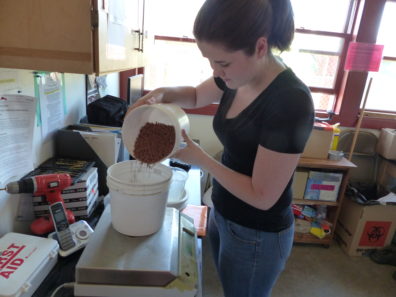

Phoenix Bennett – Mule deer fawn bedding sites in the agricultural landscape of southeastern Washington
Caitlin Cheney – Comparing salivary glands of mule and white-tailed deer
Jenna Chapman – Social behavior and space use by American pikas at Craters of the Moon National Monument
Bethany Tegt – From mountain tops to lava beds: A comparison of haying and foraging by American pikas in typical and atypical habitats
Lacey Rose – Foraging in a complex world: Do mule and white-tailed deer use olfactory cues to locate and select their diets?
David Navarro – Assessing the accuracy of accelerometers for measuring behavior of deer
Katie Wat – Influence of forest succession and forage plantings on nutritional carrying capacity and habitat selection of Roosevelt elk
Adrian Rus – Survival and nest success of sympatric greater sage-grouse and Columbian sharp-tailed grouse in eastern Washington