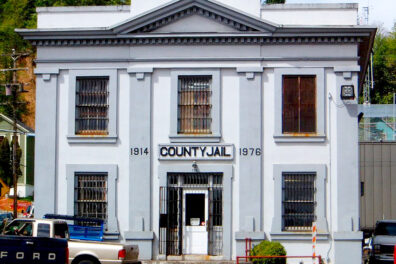
Good Old Boys From Good Old Families”: Rural Criminal–Legal Involvements and the Reproduction of Social Inequality
Published (Open Access) in Rural Sociology, vol. 90, no. 4 (2025)
Abstract:
In this paper, we draw upon 71 in-depth interviews to explore an under-researched aspect of the criminal–legal experience as it pertains to reproduction of inequality: interactions of symbolic resources including social and moral capital with criminal–legal trajectories in rural communities. We find that rural communities can provide significant support to residents when caught in legal transgressions, minimizing both trauma and long-term impacts. But for those who lack resources, whether due to shorter residencies, marginalized race and/or class statuses, or stained local reputations, communities can provide a combination of low support and high visibility that amplifies negative impacts. We highlight the complexity of rural criminal-legal system involvements and social dynamics that minimize or exacerbate their impacts. We focus on multiple aspects of the postarrest experience for those who have been in rural jails, including external judgments and internalization of stigma; visibility and surveillance that amplify negative impacts; and the roles of intersectional (dis)advantages. We illustrate the ways in which these interlocking internal and external mechanisms serve to reinforce and reproduce existing inequalities, finding that these undertheorized social processes contribute profoundly to dynamics in which communities take care of their better-off residents while further marginalizing those who are most vulnerable.
The Fine Line: Rural Justice, Public Health and Safety, and the Coronavirus Pandemic
Published (Open Access) in American Behavioral Scientist, vol. 68, no. 9 (2024)
Abstract:
In this article, we provide an early glimpse into how the issues of public health and safety played out in the rural United States during the coronavirus pandemic, focusing on Washington State. We utilize a combination of news articles and press releases, sheriff’s department Facebook posts, publicly available jail data, courtroom observations, in-depth interviews with those who have been held in rural jails, and interviews with rural law enforcement staff to explore this theme. As elected officials, rural sheriffs are beholden to populations that include many who are suspicious of science, liberal agendas, and anything that might threaten what they see as individual freedom. At the same time, they expect local law enforcement to employ punitive measures to control perceived criminal activity in their communities. These communities are often tightly knit, cohesive, and isolated, with high levels of social support both for community members and local leaders, including sheriffs and law enforcement. This complex social context often puts rural sheriffs and law enforcement officers in difficult positions. Given the multiple cross-pressures that rural justice systems faced in the wake of the COVID-19 pandemic, we explore the circumstances in which they attempted to protect and advocate for the health and safety of both their incarcerated and their nonincarcerated populations. We find that certain characteristics of rural communities both help and hinder local law enforcement in efforts to combat the virus, but these characteristics typically favor informal norms of social control to govern community health. Thus, rural sheriff’s departments repeatedly chose strategies that limited their abilities to protect populations from the disease, in favor of appearing tough on crime and supportive of personal liberty.
Legal Deserts and Spatial Injustice: A Study of Criminal Legal Systems in Rural Washington
Published (Open Access) in 134 Yale Law Journal Forum 847 (2025)
Abstract:
This Article draws on empirical research to compose a sketch of the criminal legal systems of several sparsely populated counties in central and eastern Washington State. The study reveals how, at times, the dearth of attorneys available to do the work of prosecuting and defending cases is subjecting system-involved individuals to delays and leaving them vulnerable to ineffective assistance of counsel. Another stressor is the overwhelming reliance on county governments to fund indigent defense, in addition to substantial portions of the prosecutorial and judicial functions. Rural counties, with typically weak and undiversified tax bases, are often less able to absorb the rising costs of running their justice systems. These factors result in spatial inequalities, manifest in significant variations in how different counties’ systems work.
Rural lawyer shortages are typically associated with dwindling numbers of attorneys, which in turn tend to correspond to overall population loss in a given county or region. Historical data from Washington, however, suggest that the number of active attorneys in most rural counties has increased in the last 25 years, though rarely as quickly as population counts have risen. Thus, the ratios of attorneys to population have rarely improved in rural counties over a quarter of a century. Further, the particular problem on which we focus is the dearth of attorneys equipped and willing to provide indigent defense and to work as prosecuting attorneys, especially in the rural counties we studied. A statewide shortage of those very attorneys has local governments across Washington scrambling to hire or contract with the same shrinking pool of lawyers with criminal justice experience. This fierce competition is occurring even as the total number of graduates from the state’s three law schools has declined in recent decades.
While shortcomings in indigent defense nationally are well documented, this Article reveals what those deficits look like in rural contexts in which the constitutionally mandated service is provided by attorneys who are not only harried and overworked, but who also may be inexperienced and working with scant oversight under contracts with counties. The Article also highlights new challenges arising from the fact that contract attorneys doing this work increasingly live far from their clients and appear only remotely in the courthouses (and counties) where their clients are. Deputy prosecutors, too, are increasingly physically absent from rural courthouses.
The Article draws attention to a range of concerns. Some of the stressors and red flags we identify could be alleviated by increased funding from the state—funding that could be used to attract more attorneys to work in indigent defense and prosecution in the state’s rural reaches. Yet, given the possibility that financial incentives would be insufficient to draw enough lawyers to some of these areas, it seems likely that virtual appearances by defense counsel are likely to proliferate. This raises concerns about the adequacy and confidentiality of attorney-client communication, a necessity for effective assistance of counsel. While the Washington Supreme Court has specifically held inadequate the “meet ‘em and plead ‘em” practices often associated with indigent defense, the systems in the rural study counties raise the specter of just those sorts of practices—albeit without a single in-person, face-to-face meeting between attorney and client ever having taken place. Another concern is whether the lawyers are culturally competent to provide effective assistance in rural contexts with which they may be unfamiliar.
The crisis in Washington’s criminal legal system has caught the attention of several institutional stakeholders, and we survey their responses. We also suggest other interventions that would be more responsive to rural needs in particular. Among these is more robust attention by state and regional law schools to the training that new lawyers need to hit the ground running in both defense and prosecution roles. Legal educators are also in a position to shift the dominant, urbanormative career narrative by holding out rural practice as a viable and rewarding option. Finally, law schools should do more to admit and support the students most likely to choose rural practice: those who hail from rural communities.