Prospective Students
Students interested in joining the lab should send a letter of interest to Dr. Thornton (daniel.thornton@wsu.edu), outlining your research interests and goals, and how they fit within the type of work that is conducted in this lab. Please also include a CV with relevant information (e.g., GPA/GRE scores).
Current Lab Members
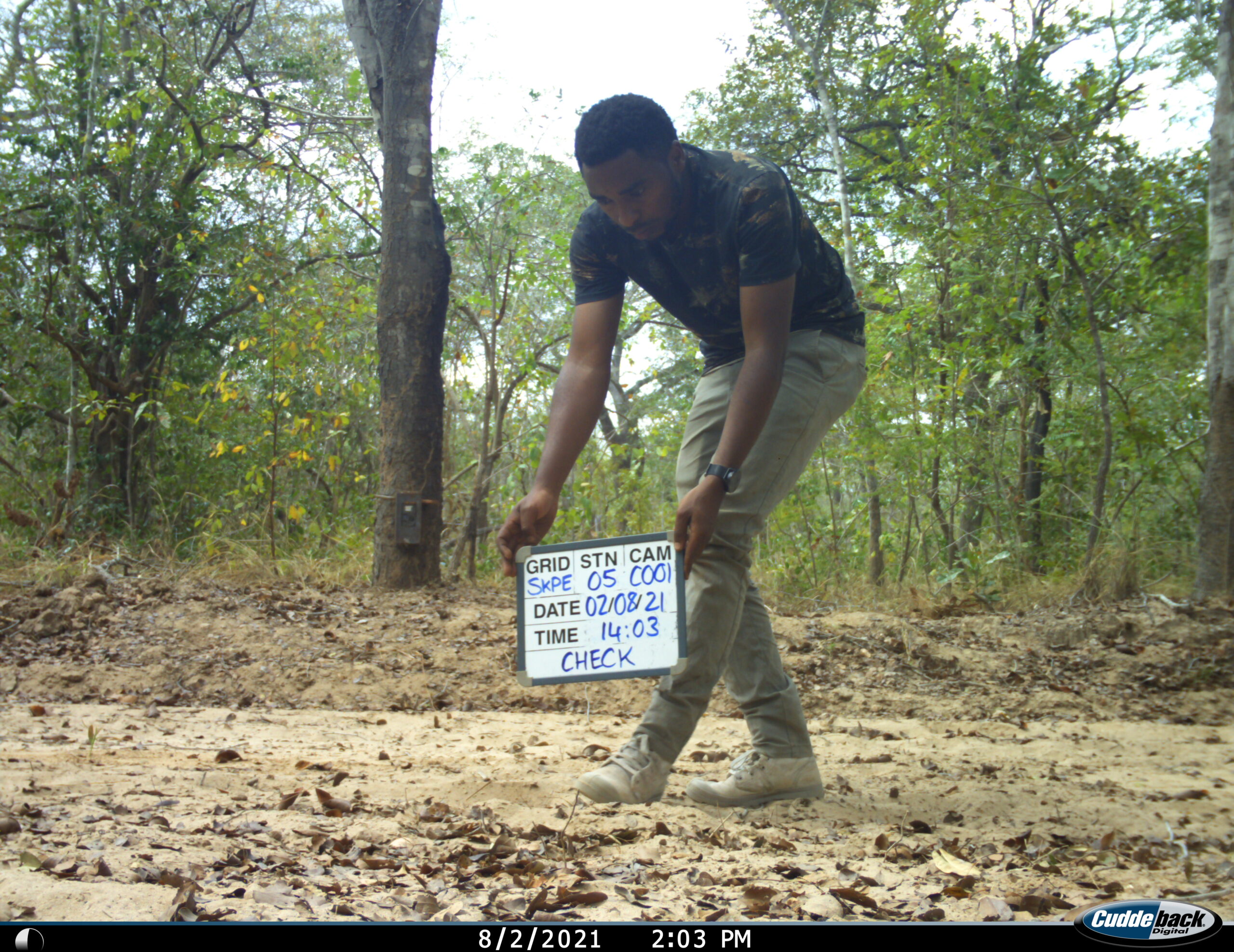
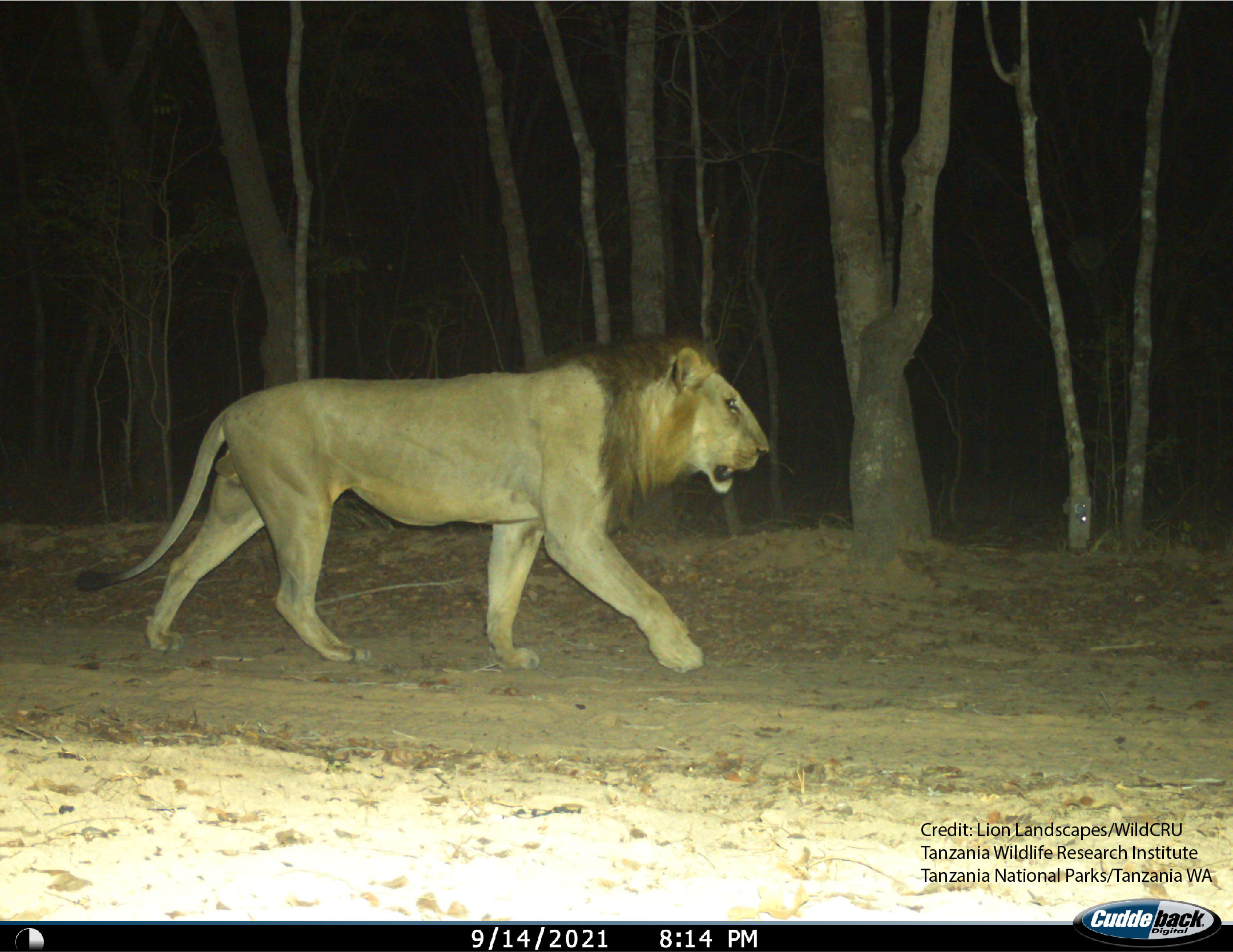
Leonard Haule, PHD
Leonard is studying the distribution and habitat use of lions and wild dogs in the Selous-Nyerere National Park in Tanzania. Leo will use a combination of track surveys, GPS collar data, and camera data to examine how these two flagship species respond to environmental and anthropogenic changes. Leo’s work is a collaboration with the Tanzania Wildlife Research Institute, Tanzania National Parks, Tanzania Wildlife Authority, Lion Landscapes, and WildCRU.
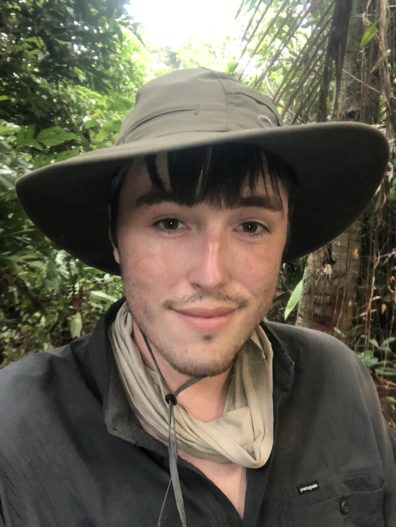
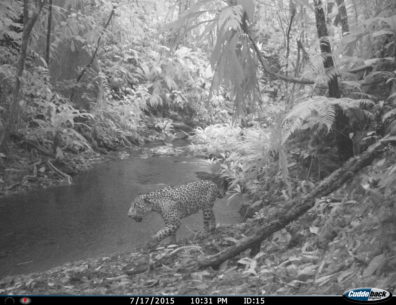
Travis King, PhD
Travis is examining the impacts of habitat loss and fragmentation on jaguars and other mid-large sized mammals in northern Honduras, through a large-scale camera trapping study in northern Honduras. Travis will examine the interplay between human presence and disturbance, and structural changes to landscapes through habitat loss and fragmentation, while also addressing the role of jaguars as umbrella species for connectivity in this threatened region of Central America. Travis is collaborating with Panthera to complete his Honduran work. Travis is the recipient of an NSF Graduate Research Fellowship, a Fulbright Fellowship, and a Northwest Climate Science Center Fellowship.
Nathan Hooven, PHD
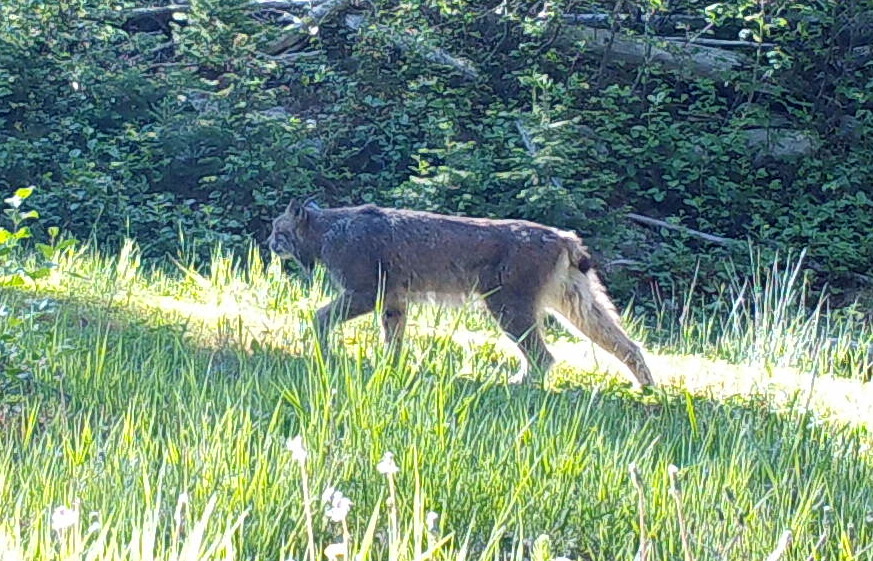
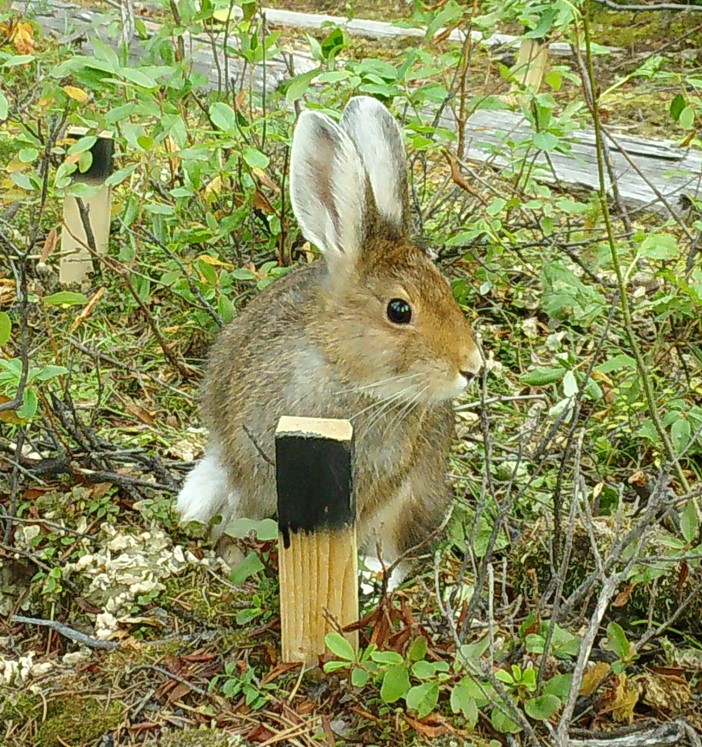
Nate is studying the spatial ecology and conservation of snowshoe hare in the Cascade mountains of north-central Washington. Through an experimental design, Nate is investigating how pre-commercial thinning of overstocked forest stands impacts snowshoe hare abundance, survival, and movement. This work is fundamentally important to understand what tools land managers have to balance forest health, productivity, and wildlife habitat, while minimizing impacts to hares and consequently the endangered Canada lynx that depend on hare. Nate will also use this experimental design to examine methods for determining hare density, and how hare respond to shifting risk landscapes. This work was designed and conducted as part of collaboration with the Washington State Department of Natural Resources, and is funded by WADNR and Seattle City Light.

Meidina Fitriana, MS
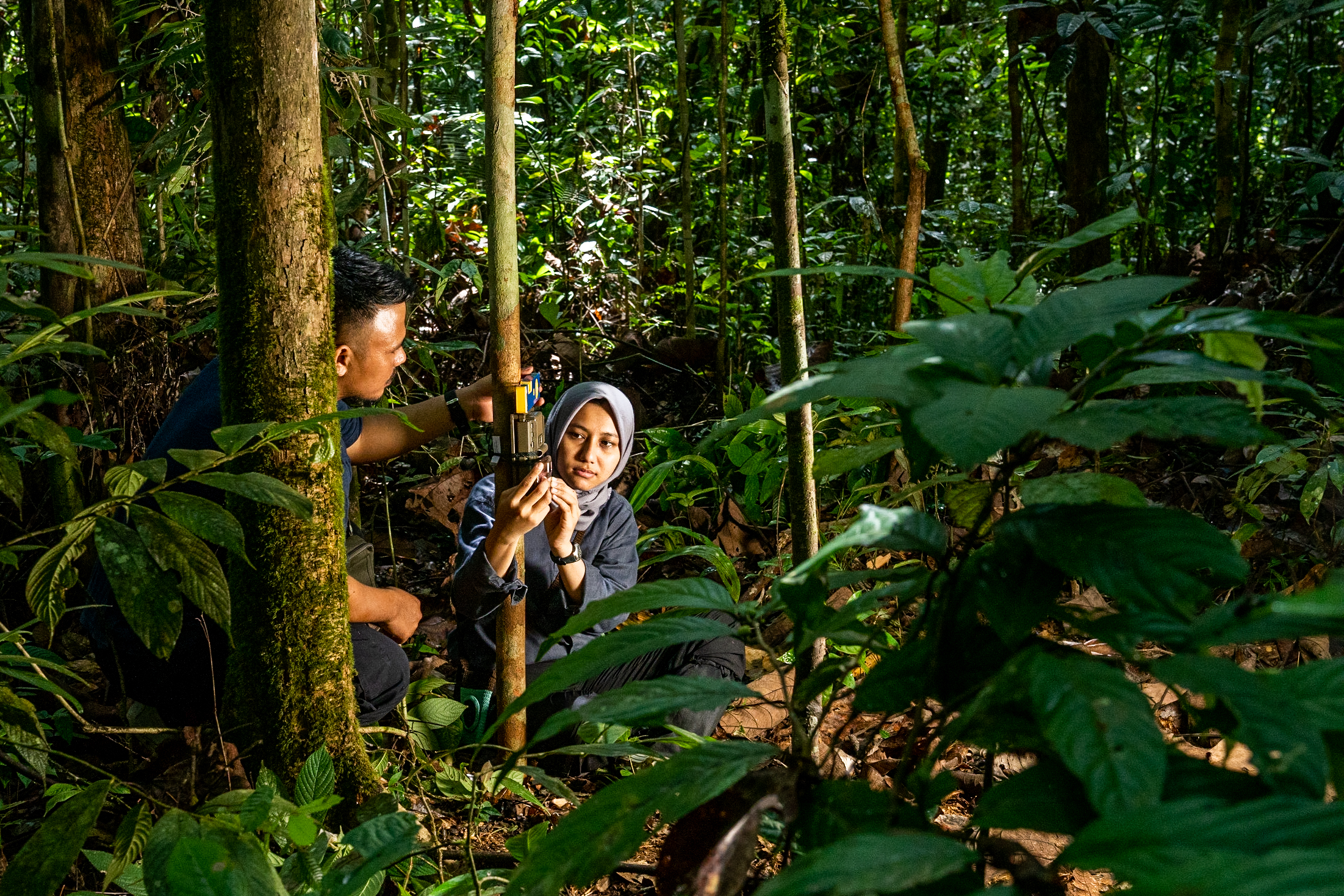
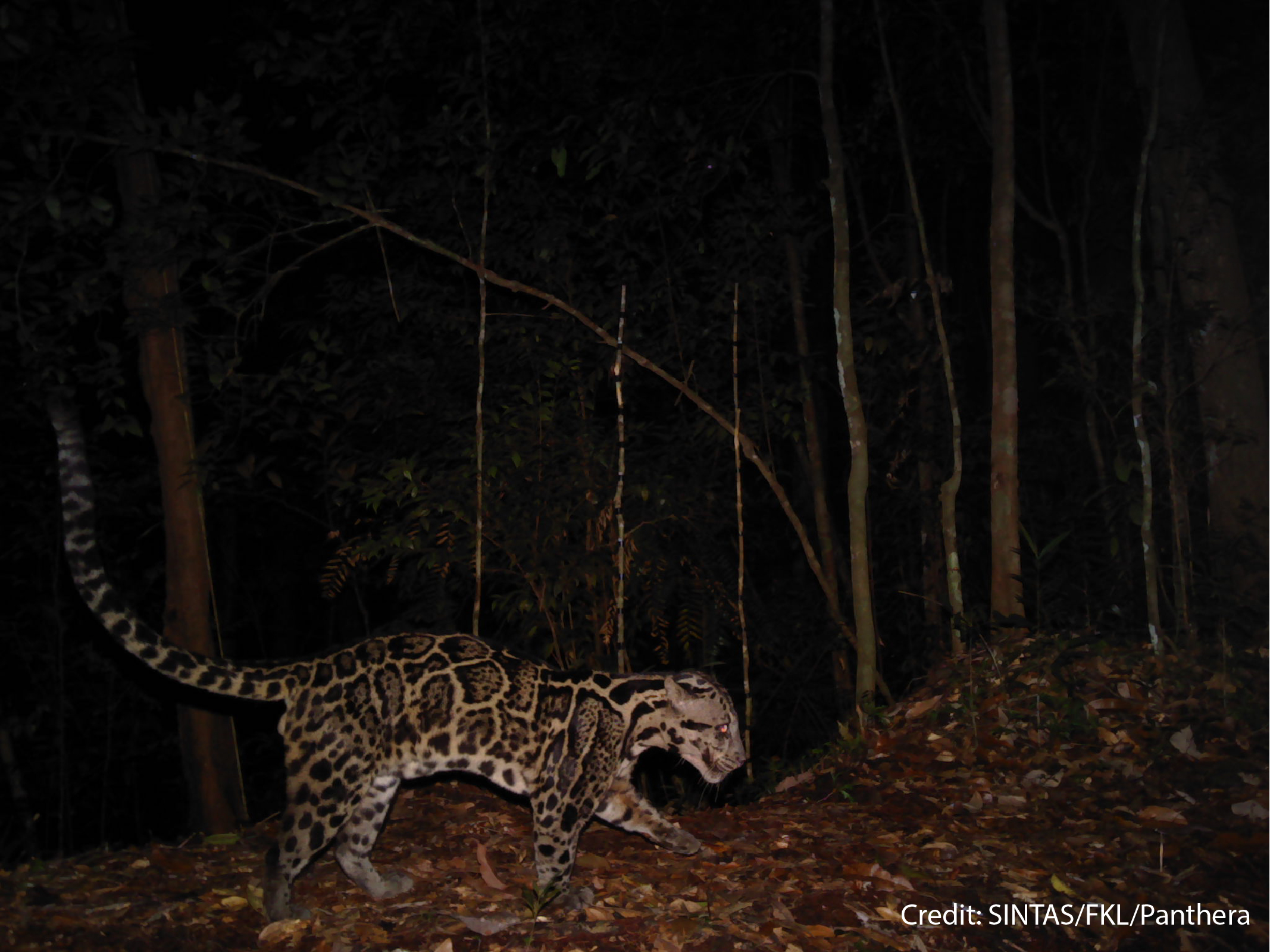
Meidina is a Fulbright Scholar from Indonesia, examining the density of tigers and clouded leopards in the remote and globally important Leuser Ecosystem of northern Sumatra. Meidina will also examine occupancy patterns of the golden cat and other small cats, and relate patterns in occupancy and density of carnivores to gradients of human disturbance and habitat variation. Meidina’s work is a collaboration with SINTAS Indonesia, Forum Konservasi Leuser, and Panthera.
Completed Students
- Katie Van, MS (2015): Thesis title: Species distribution modeling of high-elevation pine species to examine potential impacts of climate change.
- Arthur Scully, MS (2016): Thesis title: Influence of biotic interactions on Canada lynx distribution along their southern range edge.
- Kyle Ebenhoch, MS (2017): Thesis title: Comparing population vital rates of resident and translocated greater sage-grouse on the Yakima Training Center, Yakima, WA.
- Landon Charlo, MS (2018): Thesis title: Influence of artificial canopy gaps on wildlife and understory in young coastal temperate coniferous forests of the Pacific Northwest
- Travis King, MS (2019): Thesis title: Broad-scale influence of biotic and abiotic drivers of carnivore occupancy in Washington
- Peter Olsoy, PhD (2019):
- Paul Jenson, MS (2020): Snowshoe hare population ecology in lynx occupied areas of Washington
- Anna Staudenmaier, MS (2020):
- Michelle Peziol, MS (2020):
- Kelsey Gump, MS (2021): Spatial and temporal effects of motorized and nonmotorized recreation on a wildlife in eastern Washington
- Alissa Anderson MS (2022): Glacier’s Wildlife: a noninvasive investigation of a Canada lynx population and wildlife spatiotemporal response to recreation in a popular national park.
- Erik Peterson MS (2022): A summer feast atop the Crown of the Continent: The interplay of grizzly bears and army cutworm moths across Glacier National Park’s alpine talus slopes.
- Lucy Perera, PhD (2024): Assessing the impact of human disturbances on jaguars and terrestrial vertebrate communities in Neotropical forests: THE Maya Biosphere Reserve as a case study
- Marwa Mahmound, MS (2025): MONTANE CARNIVORE DETECTION AND OCCUPANCY IN THE HIGH OREGON CASCADES
- Sujay Singh, MS (2025): WILL A TALE OF TWO CATS BECOME A TALE OF ONE? CANADA LYNX AND BOBCAT DENSITY AND DYNAMIC OCCUPANCY IN A MOUNTAIN ECOSYSTEM
- Kat Burgstahler, MS (2025):CLIMATIC ADAPTABILITY AND RESILIENCY OF NORTH AMERICAN SAGEBRUSH-STEPPE MAMMALS AND BIRDS