Research Summary
1. Regulation of Telomerase
Because most adult human cells lack telomerase activity, as they go through successive cell divisions, their telomeres gradually shorten. Ultimately, this leads to replicative senescence. In contrast to adult human cells, high levels of telomerase activity are prevalent in 90% of cancerous and immortal human cells. For decades, it has been known that the TERT gene is subject to stringent repression and human cells rarely evade senescence. The Zhu lab is dedicated to deciphering the mechanisms accountable for establishing and sustaining this repressive state of the TERT gene during development, as well as its expression in cancer cells and normal proliferating tissues.
2. Mouse Models of Human Diseases: Bridging Gaps in Physiology
Mouse models have proven indispensable in biomedical research, providing invaluable insights into human diseases. However, disparities in human and murine physiology can hinder the translation of discoveries from mouse models into human clinical trials. Telomere biology presents a prime example because of the significant differences in telomere length and telomerase expression between mice and humans. While most human somatic cells lack telomerase expression and have short telomeres (ranging 5-15 kb), adult mouse cells universally express telomerase and possess very long telomeres (≥ 50 kb). This contrast contributes to the distinct tendency of human and mouse somatic cells to undergo telomere-driven replicative senescence, a phenomenon implicated in impaired tissue regeneration, aging, and age-associated disorders.
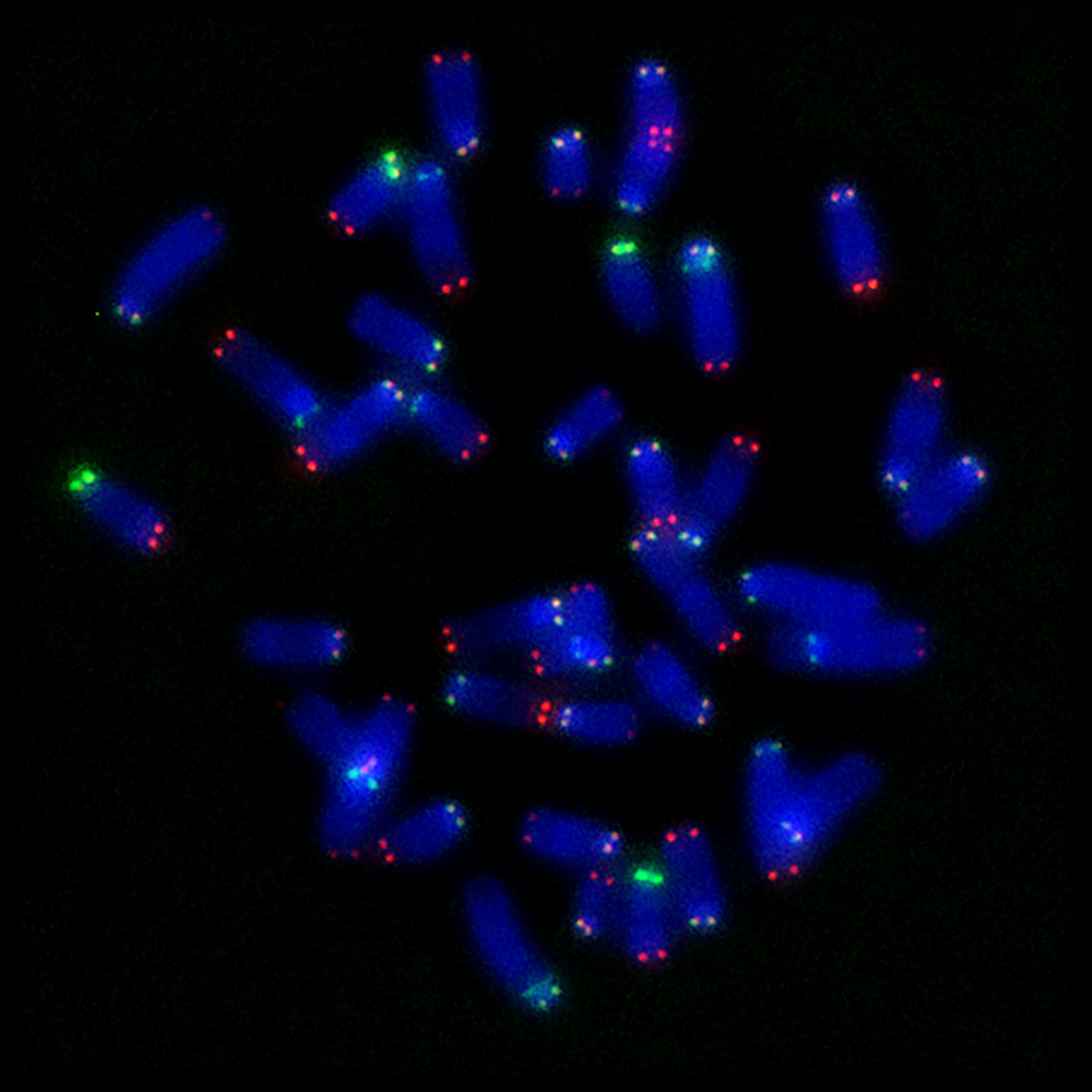
In the pursuit of refining mouse models for studying aging and age-related ailments, we have developed a genetically engineered mouse strain called HuT mice, aimed at embodying human-like telomere homeostasis. The concept underlying HuT mice builds upon two decades of comprehensive research into the genetic and epigenetic regulation of the human TERT (hTERT) gene during cellular differentiation and development. Leveraging these insights, we strategically incorporated human regulatory elements of hTERT into the mouse Tert locus (mTert), resulting in a humanized mTert gene: hmTert. These genetically engineered HuT mice (Terth/h) exhibit little telomerase activity in most adult tissues and are born with telomeres measuring less than 10 kb — faithfully mimicking human telomere homeostasis. This groundbreaking HuT model holds significant implications for studying cancer and other age-related diseases, offering a dependable platform for unraveling the complexities of human physiology in the context of aging.
Areas of Current Research Focus in the Laboratory
- Genetic and epigenetic regulation of the human telomerase gene during development and cell differentiation
- Development of HuT mice: A mouse strain with humanized telomere homeostasis
- Study of cellular senescence in mouse cells with human-like short telomeres
- Assessing the influence of humanized telomeres on mouse lifespan and health-span
- Exploration of innovative strategies for melanoma prevention and treatment through the utilization of HuT mice
Current Research Funding
- National Institute on Aging, 2022-2027
- National Institute of General Medical Sciences, 2023-2028
- Department of Defense (DoD) Congressionally Directed Medical Research Program (CDMRP), 2023-2027