CMCL at ACI fall 2019 convention
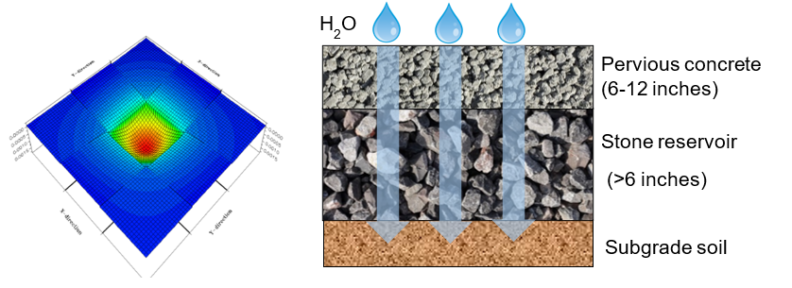
snassiriOthman AlShareedah from CMCL presented his work on developing a mechanistic thickness design method for pervious concrete pavement (PCP) at the American Concrete Institute (ACI) 2019 Fall Convention in Cincinnati, Ohio. The mechanistic method involved investigating the in-situ elastic modulus and modulus of subgrade reaction of 14 PCPs across Washington State and developing a flexural fatigue model for pervious concrete pavement. The fatigue model was developed using a total of 66 PC beams made with two aggregate types (angular and round) and three porosity levels (20%, 25%, and 30%) under flexural fatigue loading in three stress ratios (SR): 0.75, 0.8, and 0.85. Recommended PCP thicknesses were proposed using the developed fatigue model, the in-situ mechanical properties of PCP, and traffic categories based on the American Concrete Institute (ACI) guide for the design of concrete parking. The developed thickness design method and the database will bridge the current knowledge gap in the structural design of pervious concrete pavement. The results are published in two papers in ASCE and C&BM journals.