STARS in Hanford and Fukushima
Student Training And Research Season (STARS) in Hanford and Fukushima
-
Apply today through this program application portal
Application Deadline for Summer 2026 in Japan: December 15th, 2025
Navigation
Overview – Application Portal – 2025 Summer Program – 2024 Summer Program – Lecture Series – Student Background – Application Documents – Timeline – Questions
Overview
This program contributes Hanford’s restoration experience to Fukushima’s revitalization objectives. U.S. and Japanese students visit each other’s countries to experience the culture and customs of Japan, represent the Tri-Cities region, and understand the impact of restoration experiences in their own communities. Indeed, there are similarities between Fukushima’s and Tri-Cities’ efforts to clean up nuclear waste and implement individual revitalization plans. Entitled “Japan-US University Collaboration for Future Generations who can contribute to Reconstruction and Revitalization” the program involves Higashi Nippon International University Fukushima College, CBC, and WSU Tri-Cities.
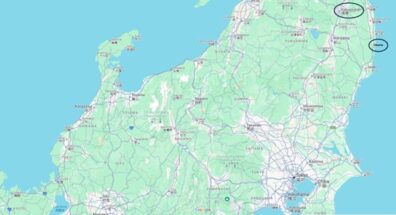
Similarly to Washington, Japan’s Fukushima is a state, called prefecture in Japanese; Fukushima is also the name of a city. In the State of Fukushima, in 2011, a tsunami caused a nuclear accident in the city of Ōkuma, on the east coast of Japan’s Honshu island. Unaffected by the accident and located 56 miles (~90km) west of Ōkuma, Fukushima City, is the site that is visited by the U.S. students in this program.
2025 Summer Program
The 2025 program welcomes applications from current WSU Tri-Cities students who are 18 years of age or older and who will be attending classes in both Spring 2025 and Fall 2025. The program will cover the costs of flights, local transportation, some meals, and lodging while in Japan. Students will have ample opportunities to learn about the Japanese language and culture, since they will reside with Japanese host families. Site visits in Japan will last two weeks, to be finalized in the interval between July 25 and August 15, with WSU Tri-Cities and CBC faculty/staff accompanying students to all scheduled activities. Through these visits, students will learn about the potentially devastating effects of events involving nuclear weaponry and waste on the targeted populations and lands for decades following such events. Students will also learn about Fukushima State’s regional produce and local celebrations and tourism. Upon returning to the Tri-Cities, students will be required to present the cultural and educational knowledge they gained to the WSUTC & CBC community, during the 2025-2026 academic year. This can be completed through a video collage, journal reflections, a PowerPoint, or through other means of presenting new information to a group.
2024 Summer Program
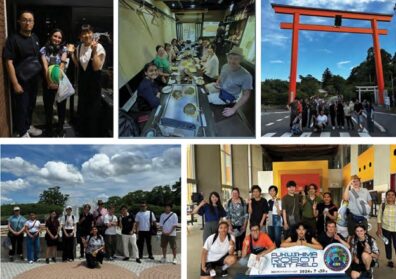
Last summer, two WSU Tri-Cities students visited Japan to explore the parallels between the Tri-Cities and the State of Fukushima in their initiatives to clean up nuclear waste and revitalize their communities. Joined by fellow students from Columbia Basin College and Higashi Nippon International University and accompanied by WSU Tri-Cities and CBC faculty/staff, they gained firsthand insights into the impacts of nuclear power and waste. They also learned about Japan’s university systems and Fukushima’s local tourism and vibrant celebrations. Students also visited Nagasaki and Hiroshima, delving into Japan’s rich history and heritage.
Participants
- WSUTC Students & Faculty/Staff:
- Michael Hernandez Jordan, Electrical Engineering
- Brianna Salois, Civil Engineering
- Dr. Sarah Newcomer, Associate Professor of Literacy Education
- CBC Students & Faculty/Staff:
- Hassan Cruz, Civil Engineering
- Citlali Monay, Cyber Security
- Elijah Saba, Business
- Jennifer Castro Velasquez, Director of Equity Center & Title V
Lecture Series
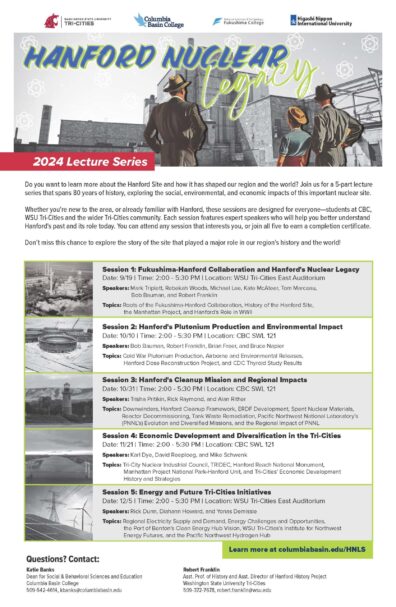
Integrated in the five-year partnership between WSU Tri-Cities, Columbia Basin College, Higashi Nippon International University, and Fukushima College is the Hanford Nuclear Legacy lecture series, to which WSU Tri-Cities’ own Bob Bauman and Robert Franklin have also been contributing. For the series, Robert also serves as the curriculum Co-Lead together with CBC’s Katie Banks.
Student Background
Students will participate in presentations and field trips and will develop and submit a concise project report, journaling daily experiences and reflecting their views on the revitalization of environments subsequent to nuclear waste management. The program is open to undergraduate and graduate students. For a successful participation in this program, students need the background knowledge that is normally acquired towards the end of the second year of a Bachelor’s program that encompasses classes on historical, scientific, educational, and/or social/cultural aspects of the environment and society, broadly defined.
Independently of a specific major, the eligibility requirements for all WSU applicants are:
- undergraduate or graduate standing
- an overall cumulative GPA of at least 3.0
- a cumulative GPA of at least 3.0 in any courses related to the environment and/or social/cultural topics
- one or preferably two semesters remaining prior to graduation at the time of application
Application Documents (Combined in one single PDF file)
- Resume
- WSU transcript
- Three-page max single-spaced motivation letter to describe in this sequence:
- career goals and alignment of such goals with this program
- reason for interest in this opportunity
- interests in and any previous experiences with learning about the Japanese language and culture
- any prior experience with any kind of international travel and/or your experiences interacting with people who are different from you (linguistically, culturally, racially, etc.).
- any prior experience with any topic about nuclear waste clean-up initiatives and/or related social/cultural topics
- any prior experience with languages and cultures other than American, including an example from your past about how you managed to adapt to a new and unfamiliar environment and the ways you used to communicate with people who don’t speak your language fluently
- any other information that would emphasize an excellent fit between this program and the applicant’s personal background and interests
Timeline
- Student recruitment during spring and fall ’24 semesters
- Submittal of application
- 2 to 3 WSU Tri-Cities students selected by the end of January 2025
- Selected students to participate in a series of pre-departure sessions in Spring 2025
- Departure to Japan
- Residence in Japan
- Return to the U.S. and submittal of individual report
Questions
You are welcome to submit your questions or comments in the following question/comment field. Thank you.